
[Trimage Sio Clinic] Is Filling Nasolabial Folds Always the Answer?
![[Trimage Sio Clinic] Is Filling Nasolabial Folds Always the Answer?](https://d2j13kbvy9leyc.cloudfront.net/clinic-blog/5/224211108264/e10309f335be3ead8ebaebf6aa324b4700697359.png)
Trimage Sio Clinic: Nasolabial Folds,
Is Filling Them Always the Answer? <Column>
Trimage, Sio Clinic
Hello, this is Trimage Sio Clinic.
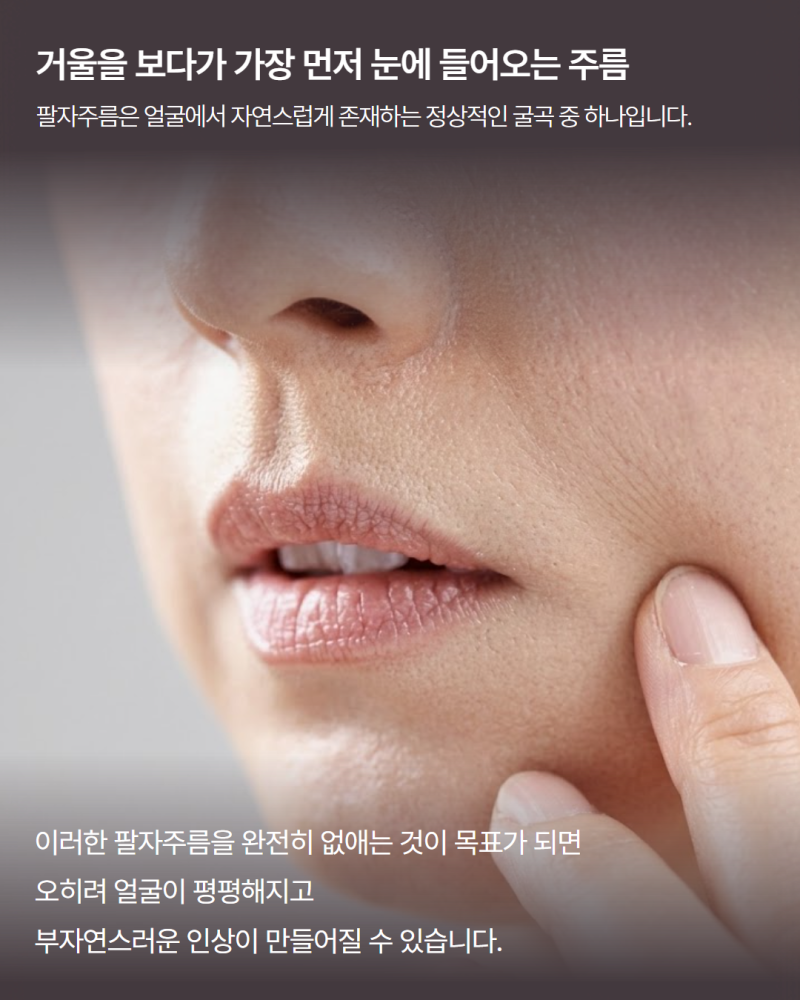
When looking in the mirror, one of the first wrinkles that catches the eye is the nasolabial fold. Many people think that nasolabial folds must be eliminated, but in reality, nasolabial folds are one of the natural contours that exist on the face.
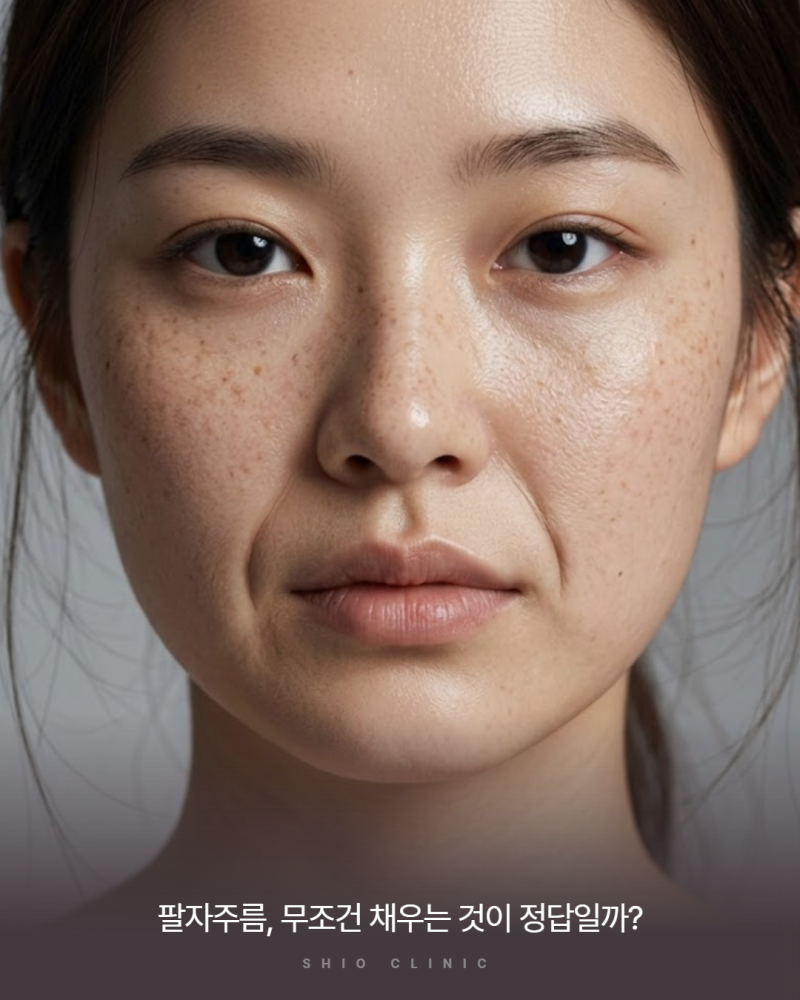
In fact, nasolabial folds are present even in newborns. Therefore, if the goal is to completely eliminate nasolabial folds, it can lead to a flattened face and an unnatural appearance.
For a natural facial contour, it is important to maintain appropriate curves and three-dimensionality. For this reason, Trimage Sio Clinic emphasizes a design that considers the overall facial structure and balance, rather than simply filling in the nasolabial folds.
Nasolabial folds can be broadly divided into two types.
One is a static wrinkle that is visible even when at rest, and the other is a dynamic wrinkle that appears when smiling or talking.
It is important to distinguish between these two accurately, as their causes and improvement methods differ.

First, static wrinkles refer to nasolabial folds that are present on the face even without making expressions.
These static wrinkles can occur as facial fat decreases or shifts with age, and can appear deeper due to reduced skin elasticity.
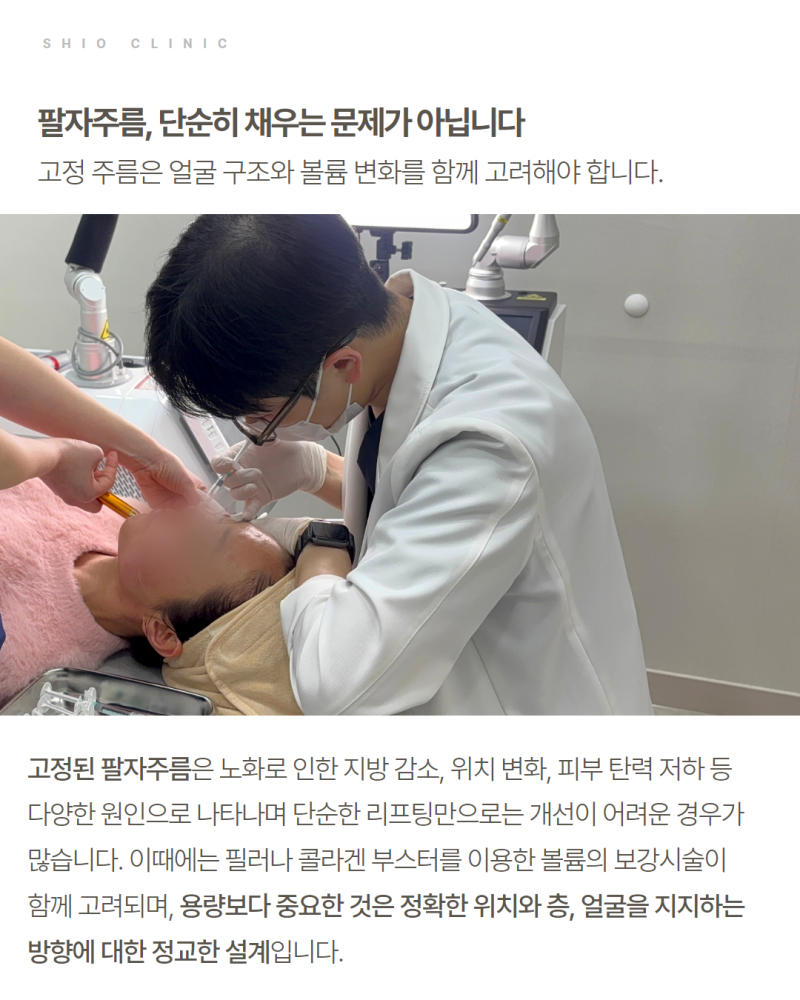
Additionally, the facial support structure
weakens, causing the nasolabial area
to appear sunken.
In such cases, it is often difficult to improve with simple lifting procedures alone. While lifting treatments can be helpful, the nasolabial area is structurally a location that requires procedures to directly replenish volume.
Therefore, volume-replenishing procedures such as fillers or collagen boosters are often considered.
Generally, about 1cc to 2cc of filler is used per side for nasolabial folds, but there are more important factors than the volume itself in actual procedures.



The precise location where the filler is injected, the layer of injection, and the direction in which it supports the face are crucial. Even with the same volume, the results can vary greatly depending on the location and layer of injection, making anatomical understanding and delicate planning extremely important.
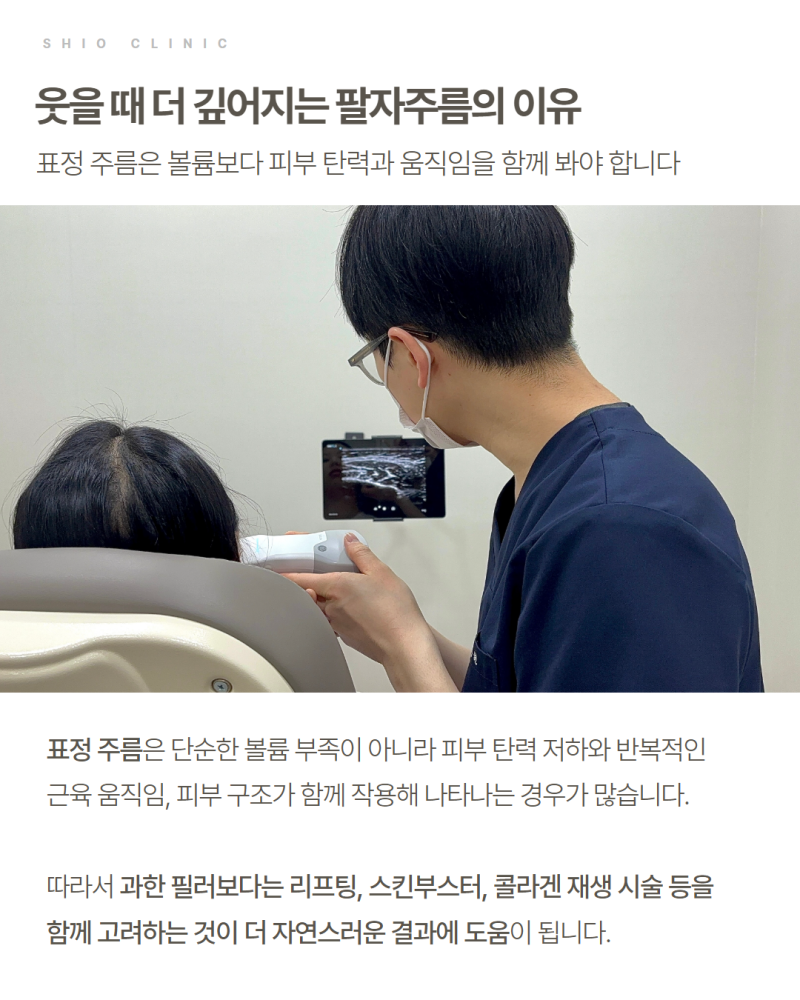
On the other hand, dynamic wrinkles refer to nasolabial folds that appear when smiling or talking. These wrinkles are often not caused solely by a lack of volume, but by a combination of factors such as decreased skin elasticity, repetitive muscle movements, and the way the skin folds during expressions.
Therefore, dynamic wrinkles are often difficult to improve by simply filling the volume. In fact, overfilling the volume can lead to an unnatural appearance when smiling.

In such cases, considering procedures that improve skin elasticity, wrinkle-lifting treatments, skin boosters, or collagen-regenerating treatments can help achieve natural results. Another important point in nasolabial fold treatments is that excessive volume augmentation can create an unnatural appearance.
If you try to fill the nasolabial folds excessively to eliminate them completely, the natural contours of the face may disappear, making the entire face appear flat. It can also make the area around the mouth look dull or the face appear puffy. These changes can ultimately disrupt the structural three-dimensionality and create an unnatural impression.
For natural improvement of nasolabial folds, it is necessary to consider the balance of the entire face, not just the nasolabial area.
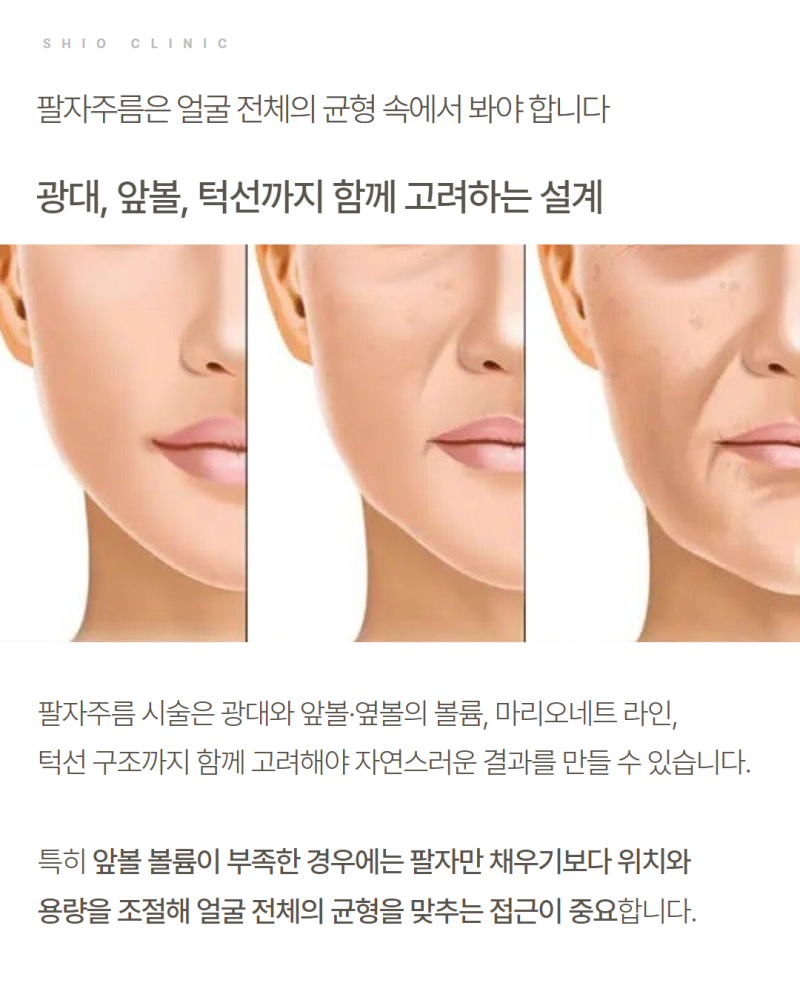
In practice, when designing nasolabial fold treatments, we start by distinguishing between static and dynamic wrinkles and confirm the situations in which the patient desires improvement. Some people want to improve the nasolabial folds visible from the front, while others are concerned about the nasolabial lines that appear when taking photos. Some are bothered by the deepening wrinkles when they smile.

Accurately identifying these differences is the first step in achieving natural results.
We must also consider the balance with the cheekbones, the volume of the mid-cheek and side-cheek, the presence of marionette lines around the mouth, and the structure of the jawline. For example, if the mid-cheek volume is insufficient, filling only the nasolabial folds can make the face look even more unnatural.
Conversely, if the patient does not wish to undergo procedures in other areas, it is necessary to adjust the location and volume of the nasolabial fold treatment to achieve overall balance.
Ultimately, the key to natural nasolabial fold improvement is
to treat with moderation, balance, and
at the precise location.
Nasolabial folds are not just a problem of one area but are connected to the entire facial structure. Therefore, approaching it based on a single wrinkle makes it difficult to achieve natural results.
By considering the three-dimensionality of the face, not just the nasolabial depressions, a more harmonious facial contour can be completed.
At Trimage Sio Clinic, we provide personalized nasolabial fold designs based on this anatomical structure and facial balance.

For your first lifting,
if you're wondering where to get
your first skin treatment,
choose Sio!
This article is adapted from SHIO Clinic's official Naver blog.
Have questions about your skin?
Book a consultation and let SHIO Clinic's diagnosis guide you to the right treatment.