
The Reason Why You Can't Just Straighten Your Rounded Back and Slumped Shoulders
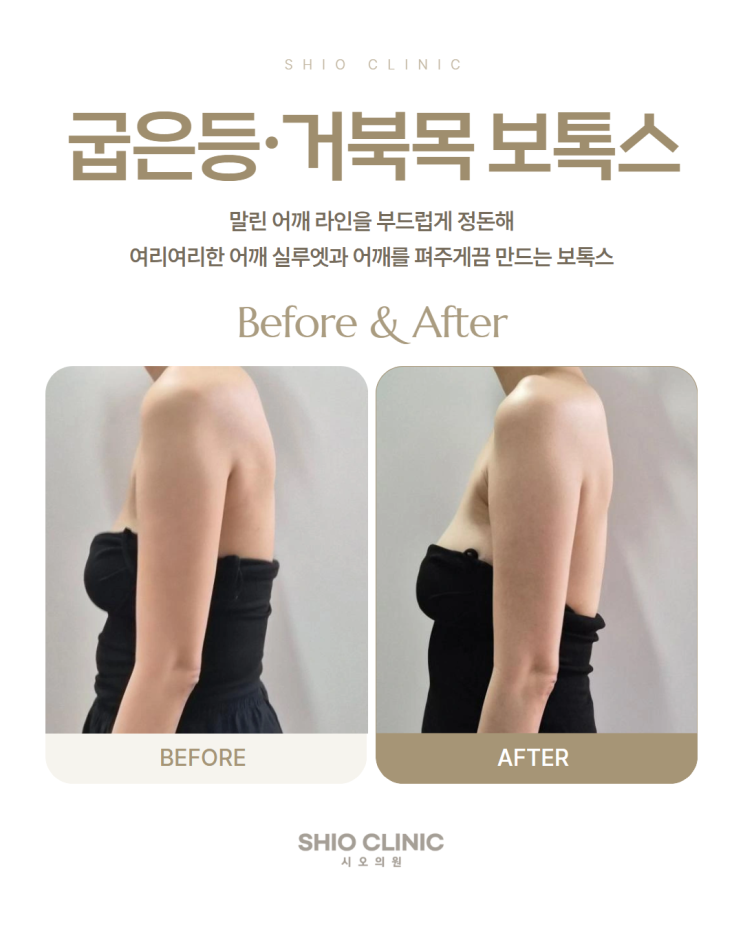
Rounded Back and Slumped Shoulders,
The Reason Why You Can't Just Straighten Them
[Sio Clinic] Rounded Back Botox, Forward Head Posture Botox
Hello. This is Sio Clinic.
When I see patients in the clinic
who are concerned about their rounded back or slumped shoulders (rounded shoulders),
I always ask them a question first.
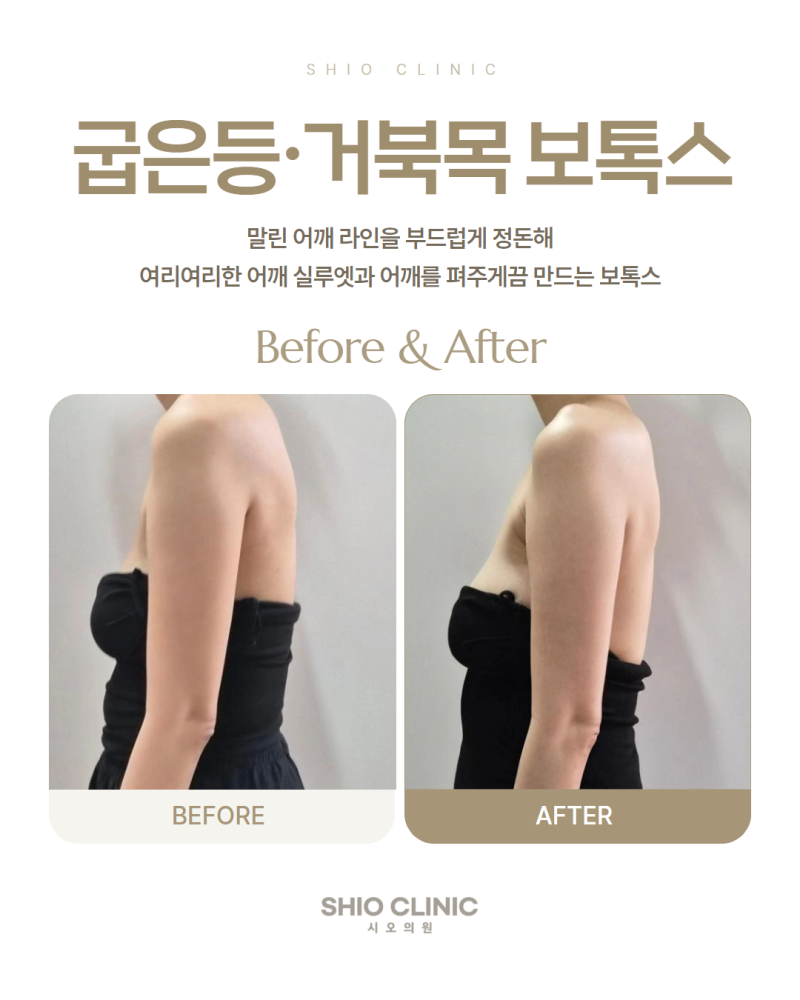
"Could you try straightening your back into a good posture?"
Most of them immediately straighten their posture.
This means they are aware that their back is rounded,
and they already know how to straighten it.
However, the problem is that this posture
doesn't last long.
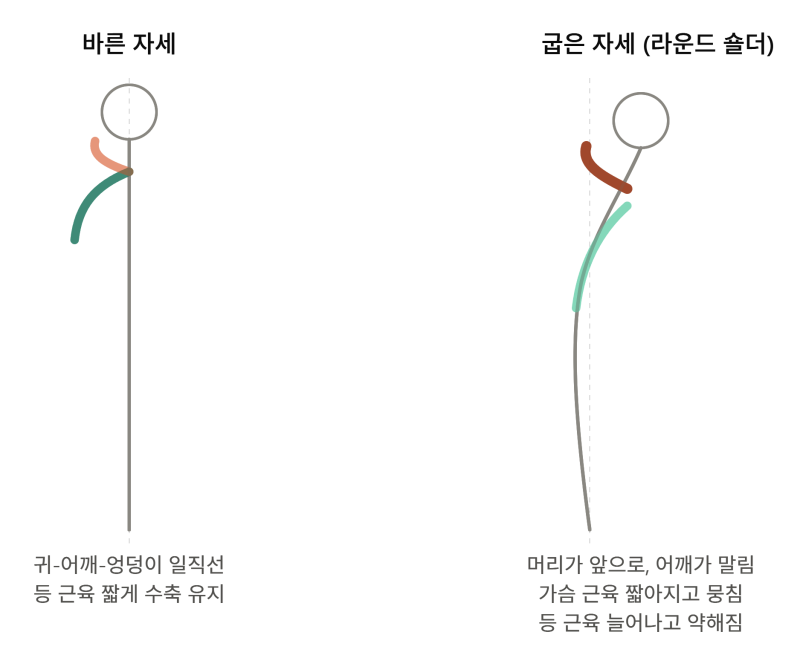
After just a few minutes, the body slowly slumps back,
and you return to your original rounded posture,
which you feel is 'comfortable'.
"It's so hard to keep my back straight."
"The rounded posture feels much more comfortable."
Why do we feel more comfortable in a rounded posture, even though we know a straight posture is better?
1. Posture is not just about bones (muscle tug-of-war)
Of course, structural problems with the bones themselves
can be the most serious.
However, this often goes beyond what medical professionals or treatments can change instantly.
What we need to focus on is the
'bone + muscle' interaction.
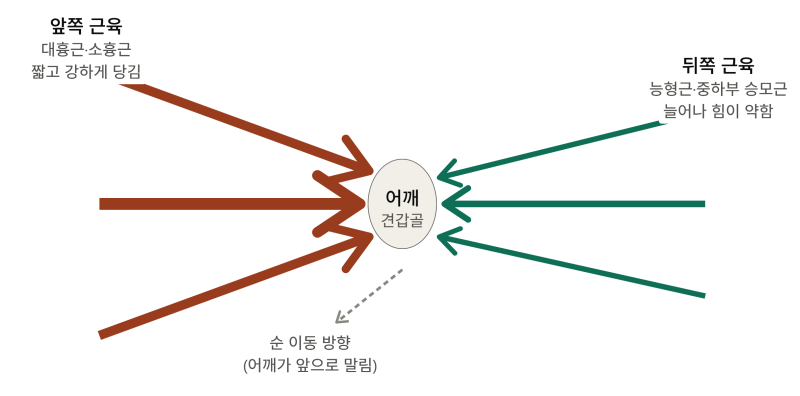
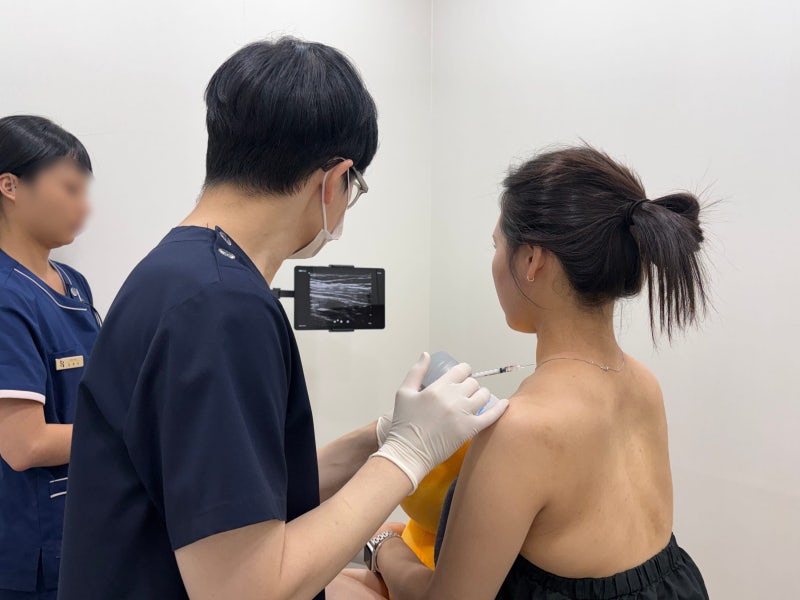
[Numerous muscles surrounding the neck, shoulders, chest, and scapula] ↓ Pulling and resisting from different directions to form the current 'posture'.
For those with slumped shoulders, it's not just a lack of "strength to pull the back straight."
If there's a strong pulling force from the front of the body that holds the shoulders and scapula, you have to fight that strong force all day long to maintain a good posture.
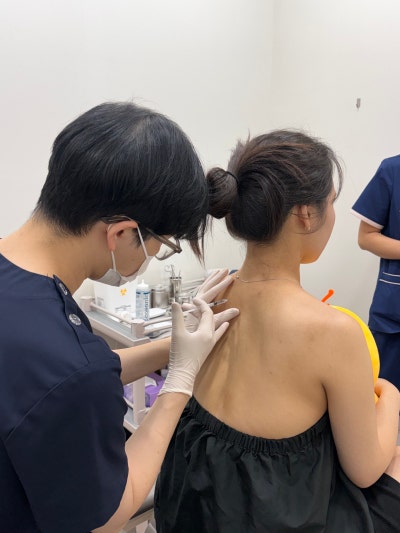
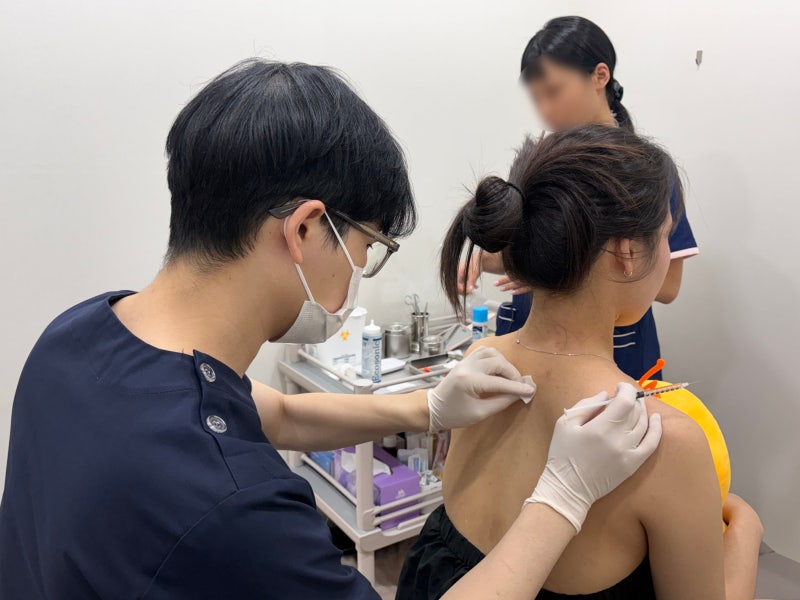
This process causes extreme fatigue in the body. Therefore, telling patients to "straighten your posture" or "open your shoulders" can be much more difficult and challenging than they might think.
That's why when considering rounded back Botox treatment, we don't just look at "which muscles are enlarged?" but comprehensively evaluate "which forces are currently fighting each other to create this rounded posture?"
2. The hidden point of slumped shoulders: 'Pectoralis Minor'
I actually hesitated a lot about whether to talk about this.
As a medical professional, it's such a crucial point
that I almost wanted to keep it to myself.
It's about the 'Pectoralis Minor'.
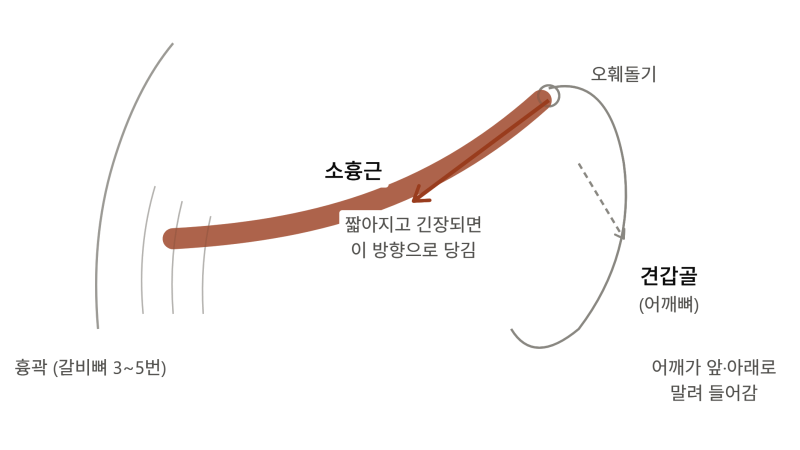
Category
Main Content
Location
An inner chest muscle originating from the rib cage and extending to the scapula (shoulder blade).
Role and Impact
When this muscle contracts, shortens, or becomes tense, it strongly pulls the shoulders forward and downward.
Medical Evaluation
Orthopedics and rehabilitation medicine also closely observe the length and tension of the pectoralis minor when evaluating slumped shoulders and scapular movement.
※ Of course, not all rounded shoulders or rounded backs are solely
caused by the pectoralis minor.
3. Botox is not just a 'wrinkle injection'
Many people think of Botox only as a cosmetic procedure, but the original medical uses of Botox (botulinum toxin) are much broader.
It has been used therapeutically in various medical fields to relax overactive muscles and control strong muscle forces. In fact, there are abundant research and clinical cases of therapeutic use of botulinum toxin for the muscles around the rib cage.
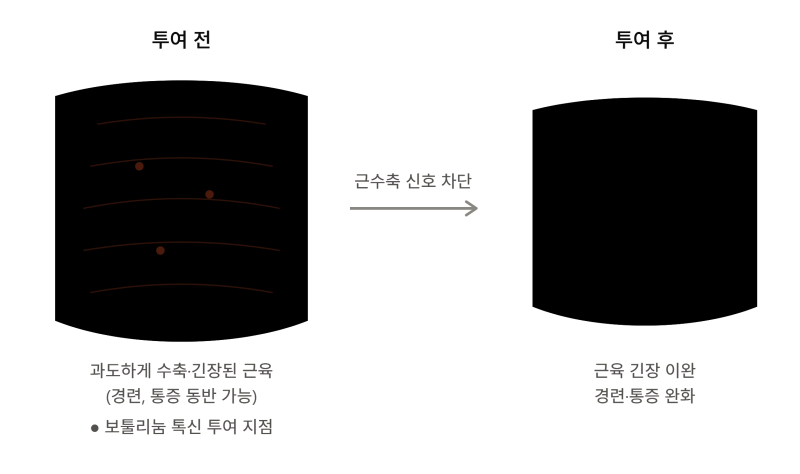
✔Example: Botox is therapeutically administered to alleviate excessive contraction, spasms, and pain in the pectoral muscles that can occur after breast reconstruction surgery.
Definition of Rounded Back Botox
"If there are excessive forces hindering a good posture,
reduce those forces."
It's not about forcibly straightening and
fixing the body.
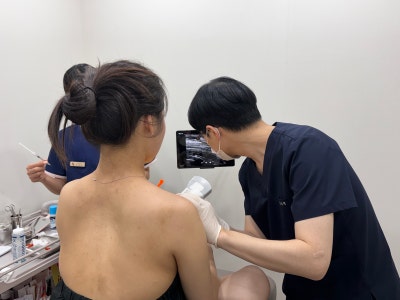
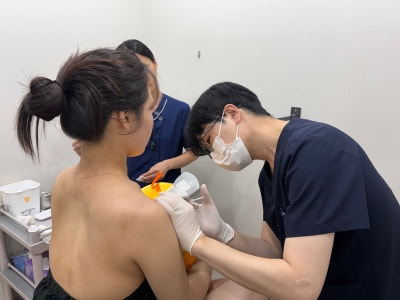
It's about creating an environment
that reduces the strong forces from the front of the body,
which the body had to constantly fight against to achieve a good posture.
It works by changing the posture from
"a posture that requires effort to straighten"
to
"a posture that is comfortable to maintain straight."
4. 'Joyful Changes' Confirmed by Meeting Numerous Patients
Throughout my experience with rounded back Botox treatments for numerous patients, I have focused on the subjective improvements patients feel in their daily lives, rather than just numerical changes (like how many degrees the shoulder angle improved).
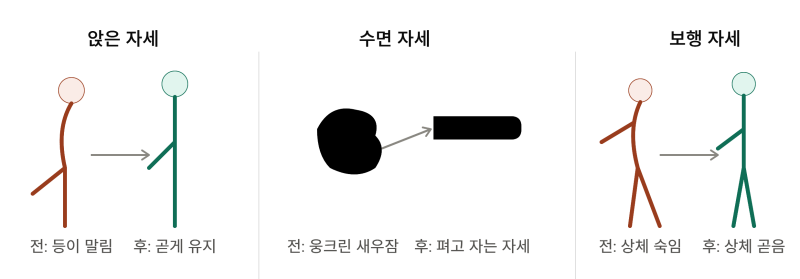
Here are some of the most memorable feedback from patients after the procedure:
Category
Actual Feedback from Patients
Comfort of Posture
"It's much more comfortable to maintain a good posture now."
"It feels uncomfortable to slouch like before, so I naturally straighten my body."
Maintaining Sitting Posture
"It's much easier to maintain a good posture even when sitting for long periods."
Changes in Sleep Habits
"I used to sleep curled up like a shrimp, but now it's uncomfortable to curl up, so I sleep with my body straight."
Walking and Body Shape
"When I walk, I unconsciously straighten my upper body comfortably."
"My shoulders are not slumped and open backward, so my chest line looks better and my body shape appears more attractive."
(※ These subjective evaluations may vary depending on individual muscle condition and body type, but the important thing is the change in postural convenience in daily life, rather than a visual change in a single photo.)
5. Frequently Asked Questions (Q&A)
Q1. Will my posture automatically improve just by getting Botox?
A. Not necessarily.
Botox doesn't create a new posture on its own. Rather, how you spend the few months while the Botox is active is key.
After reducing the strong tension in the front with Botox, you need to repeatedly practice good posture and movements, and combine them with necessary stretching and strengthening exercises for good posture to be remembered by your body.
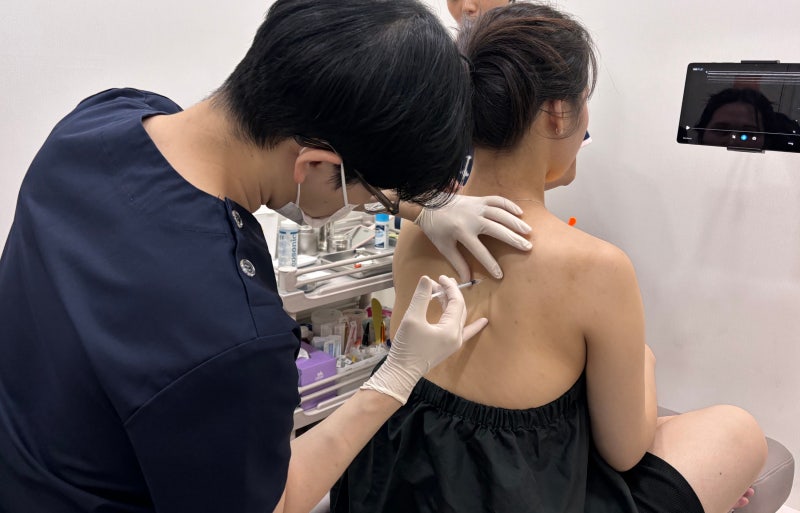
⚠️ Sio Clinic's Perspective
Rounded back Botox is not an injection that replaces exercise.
It's not an injection that "makes exercise unnecessary," but rather a "helper that allows your body, which needs to exercise, to move more comfortably."
Q2. Does everyone with a rounded back need Botox?
A. Absolutely not.
Not all rounded backs have the same cause.
Cause of Rounded Back
Suitability for Botox Treatment
Structural abnormalities of the skeleton / Thoracic joint problems
❌ Difficult to resolve with Botox (requires other treatments)
Simply insufficient strength in the back muscles
❌ Strengthening exercises are prioritized
Excessive tension in specific muscles (e.g., pectoralis minor) causing forward rounding
O Significant benefit from Botox treatment
Therefore, it is crucial to diagnose beforehand whether "this person is a type who can benefit from controlling excessive tension."
"Knowing who *not* to treat is more important than knowing who to treat."
This is the principle and order of treatment that Sio Clinic adheres to.
Sio Clinic's Concept of Good Posture
We do not want to forcibly make people's bodies
straight with rounded back Botox.
Constantly thinking "Let's straighten my back, let's fix my posture"
all day long is also not a good posture, we believe.
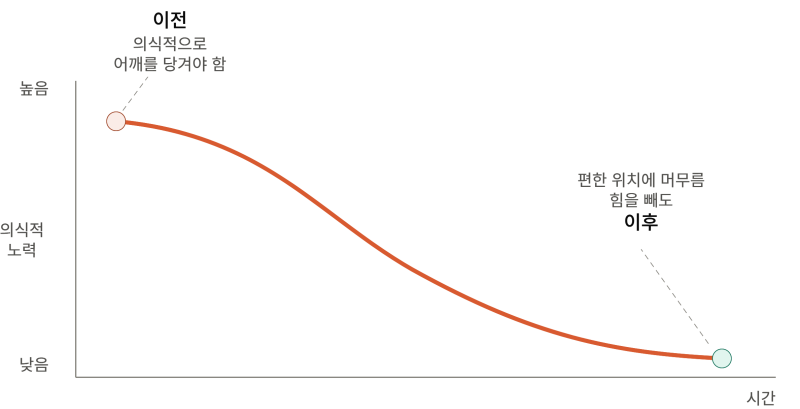
Let's make the effort required
to achieve good posture a little easier.
Instead of consciously pulling your shoulders back,
we aim to help your body rest in a slightly more comfortable position
without needing to exert that force.
And during that period, allow the body to repeatedly experience new movements.
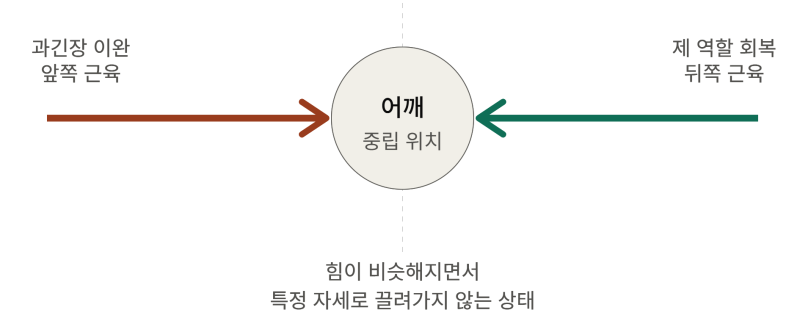
It's a procedure that makes it
a little easier to choose good posture,
rather than forcibly changing posture.
This is what Sio Clinic defines
as rounded back Botox.
If you are experiencing daily fatigue due to a rounded back and slumped shoulders,
please take a comfortable moment to check what forces in your body are pulling you down.
This article is adapted from SHIO Clinic's official Naver blog.
Have questions about your skin?
Book a consultation and let SHIO Clinic's diagnosis guide you to the right treatment.