
Seongsu Calf Botox: From Distinguishing Between Muscle Bulge and Swelling to Effects and Precautions
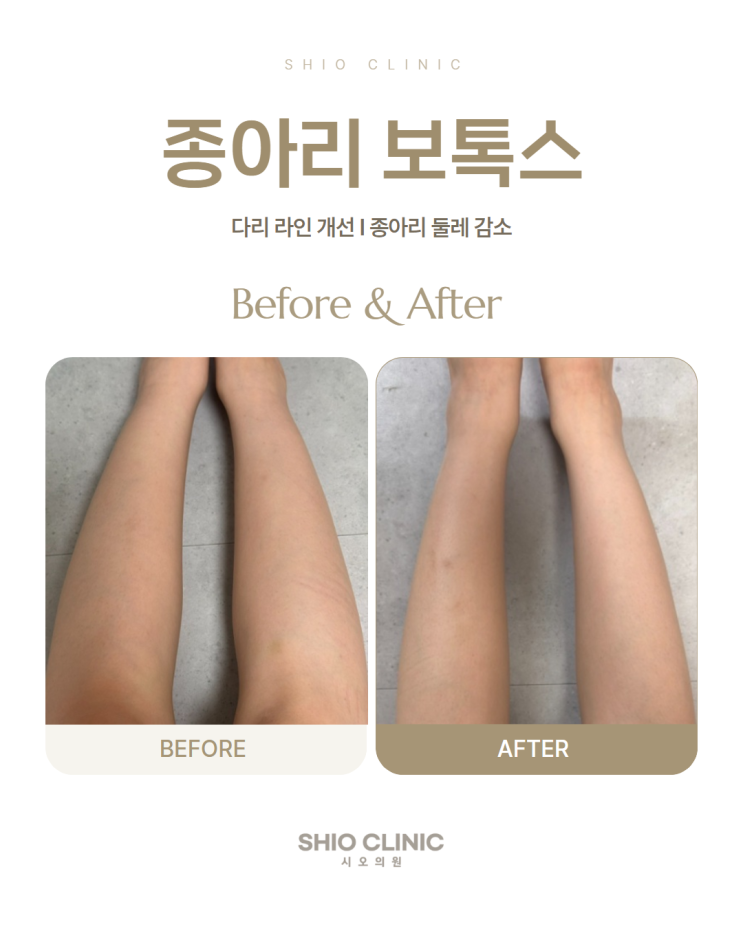
Seongsu Calf Botox: Muscle Bulge vs. Swelling
From Distinction to Effects and Precautions
Hello, this is Sio Clinic.
There are people who are concerned about their leg line because their calf line remains the same even after losing weight,
or because of the prominent calf muscle bulge when they stand on their tiptoes.
When researching Seongsu calf Botox, the most common questions are
how much thinner it will become, when changes will appear,
and whether there will be any discomfort when walking.
However, even calves with the same circumference
can have different reasons for appearing thick.
Depending on the proportion of muscle, fat, and swelling,
the appropriate approach and expected changes also differ.
1. If your calves are thick, should you check the muscles first?
The volume of the calf
is not solely determined by muscle.
The thickness of subcutaneous fat, the degree of
muscle development, bone structure, and swelling
all have an impact.
If a firm contour appears clearly when you lift your heels,
the influence of muscles can be considered.
However, this movement alone cannot determine suitability for the procedure
or the required dosage.
Conversely, if your legs feel heavy in the evening compared to the morning,
or if sock marks are deep or the circumference changes significantly,
you should also check if there is swelling.
Calf muscle bulge and calf swelling must be distinguished.
Seongsu Calf Botox :: Sio Clinic
Botox is not a procedure that directly reduces fat
or treats the cause of swelling,
so the reason for the thickness must be identified first.
Especially if one leg suddenly swells
or is accompanied by pain and heat,
medical examination for the cause is necessary before cosmetic procedures.
2. Seongsu Calf Botox Effects: What Changes Can Be Expected?
Calf Botox is a procedure that uses botulinum toxin to
inhibit nerve signals transmitted to the target muscle,
temporarily reducing muscle contraction.
It is mainly used to alleviate the prominent contour
caused by the development of the gastrocnemius muscle in the back of the calf.
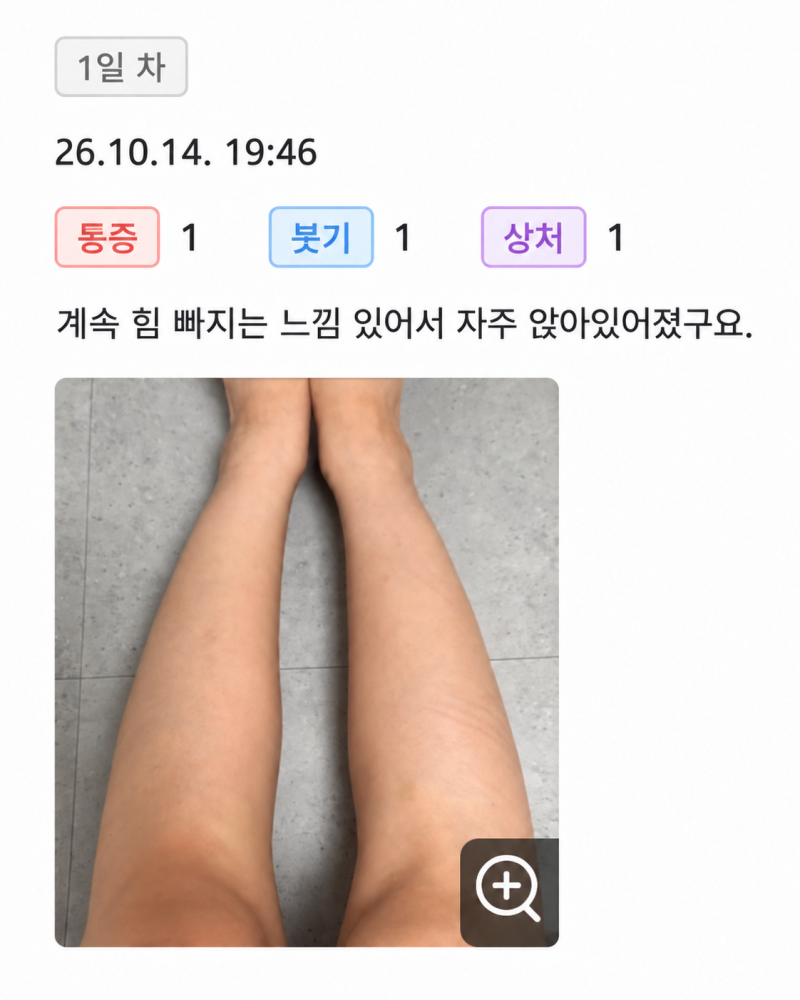
As the muscle volume decreases over time,
the calf muscle bulge may appear less prominent.
However, it does not necessarily mean the entire leg will uniformly become thinner,
or that the circumference will decrease to the desired level.
Even in muscular calves, the change in the
prominent contour may be more noticeable than the change in overall circumference.
Therefore, rather than simply focusing on how many centimeters are reduced,
it is important to consider which area's protrusion is a concern
and how it harmonizes with the overall leg proportions.
3. Ultrasound Examination: Why We Don't Just Look at Calf Thickness
Even calves that appear similar from the outside
can have different subcutaneous fat thickness, muscle location,
and patterns of muscle development on each side.
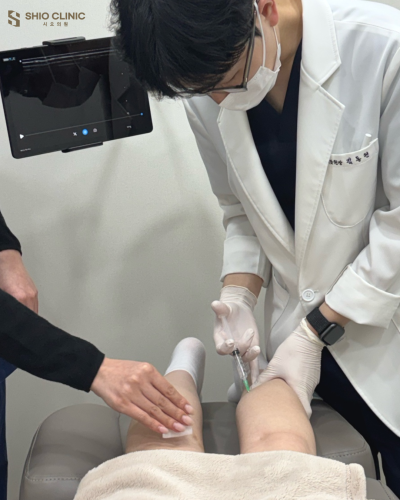
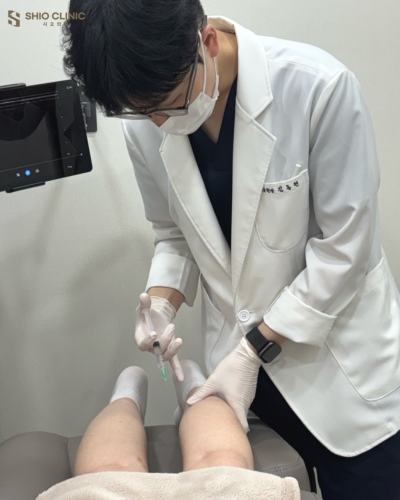
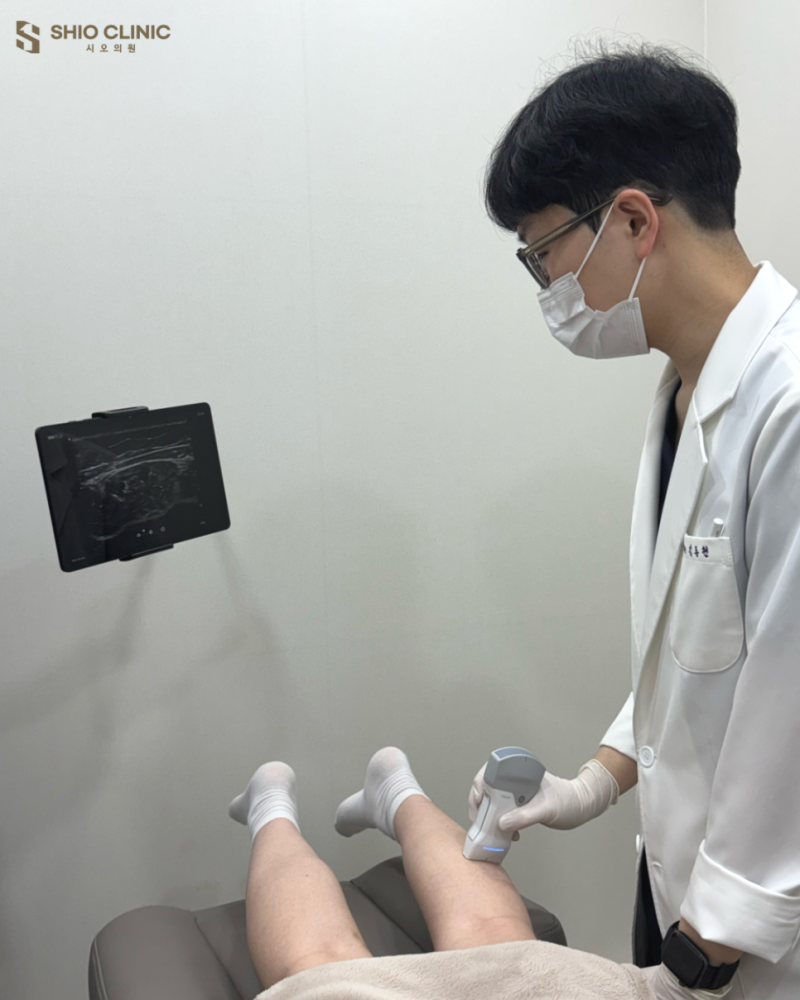
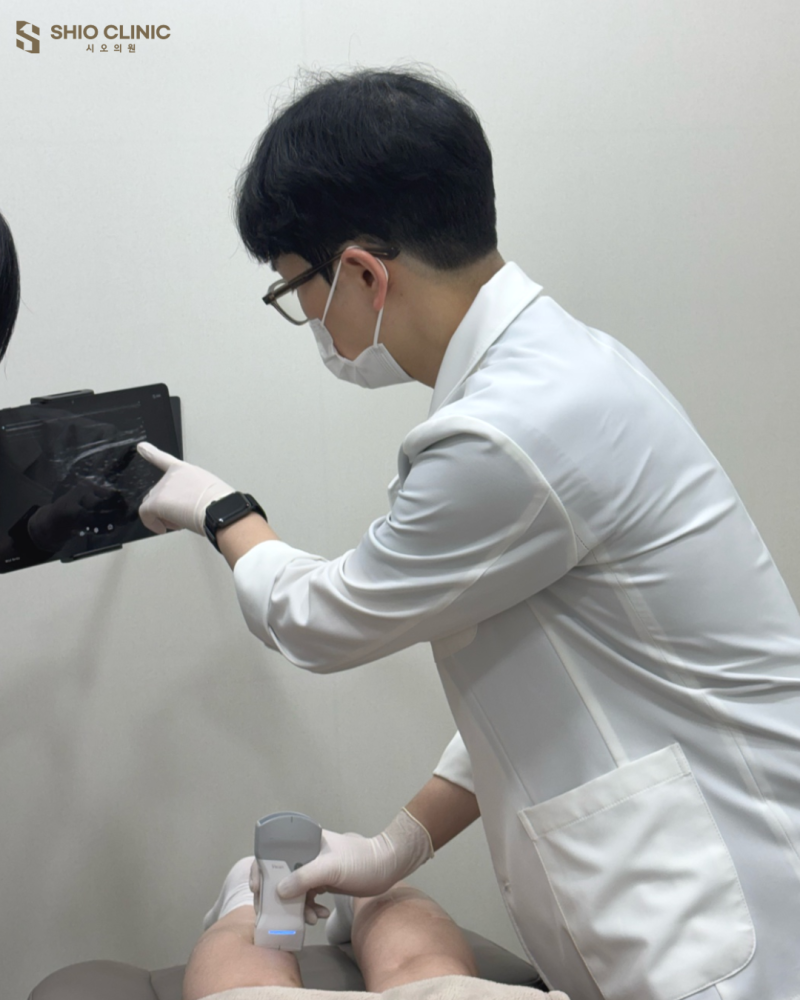
Using ultrasound as needed can help
confirm the thickness of tissues and the location/depth of muscles
that are difficult to distinguish by appearance alone.
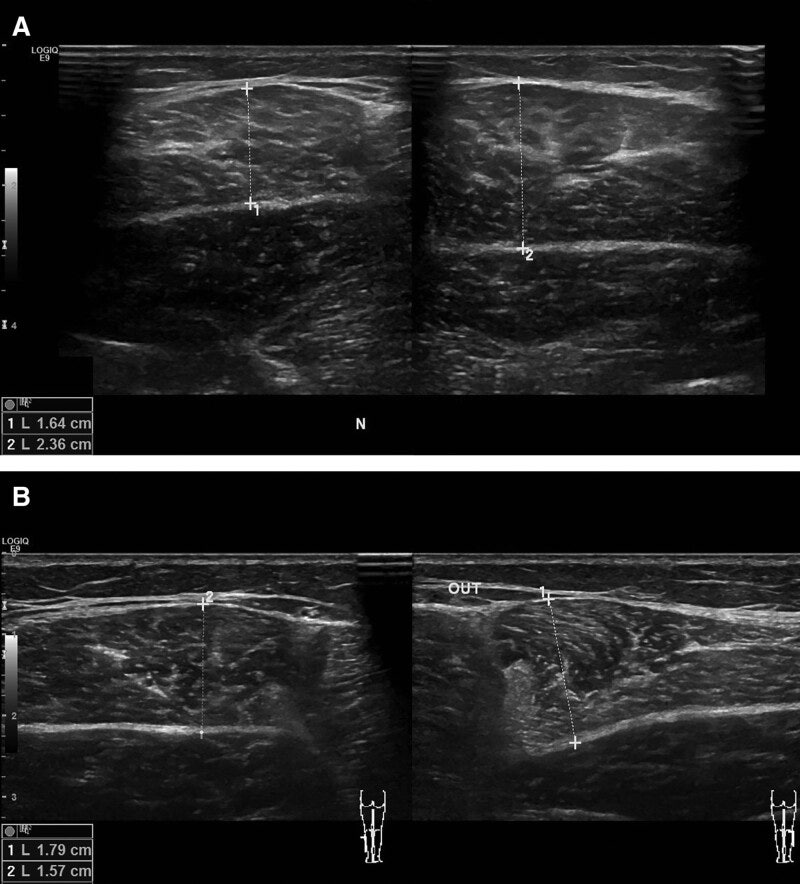
Copyright © 2023 by the Author(s). Published by Wolters Kluwer Health, Inc. on behalf of the American Society of Plastic Surgeons.
It is also necessary to examine the changes between a relaxed state and a contracted state,
the contour that appears when lifting the heels,
and usual walking and exercise habits.
The calf muscles are involved in propelling the body forward when walking
and lifting the heels.
This is why the treatment area must be determined considering not only appearance
but also movement.
When researching Seongsu calf Botox,
it is advisable to examine how the structure and function of your legs are assessed,
rather than just comparing fixed dosages.
4. Does a higher dosage lead to better results?
Calf Botox is not a procedure where
satisfaction increases simply by increasing the dosage.
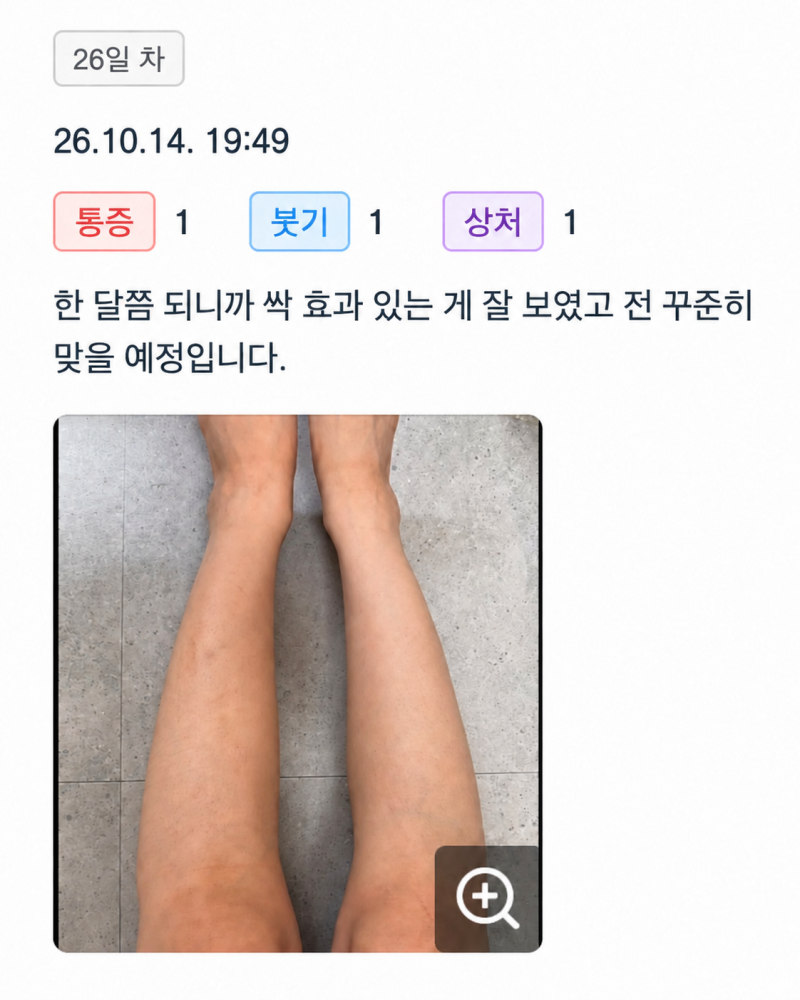
The injection site, depth, and dosage must be adjusted
considering the location of muscle development and the difference between sides.
Injecting the same amount on both sides is not suitable
for everyone.
Especially for those who enjoy running or hiking,
or who work standing for long hours or dance,
the degree to which they use their calf muscles differs.
You should inform us about these lifestyle patterns during your consultation.
This is because if the muscle function becomes excessively weak,
symptoms such as fatigue when walking or climbing stairs,
and difficulty lifting the heels may occur.
The goal is not to reduce as much as possible,
but to appropriately alleviate the prominent contour
while considering the necessary functions in daily life.
5. Timing of Effects and Before/After Photos: How to Interpret Them?
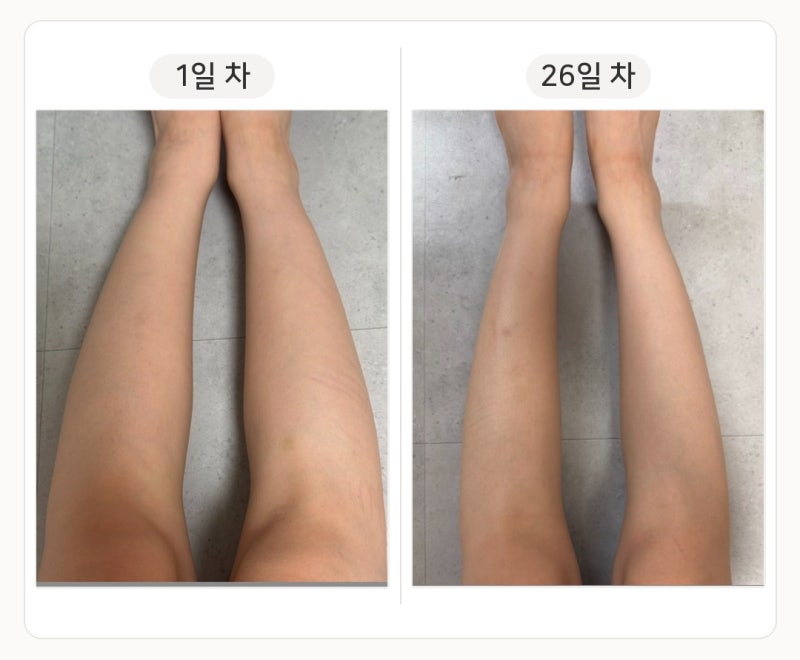
Calf Botox is not a procedure where the leg circumference
immediately decreases after injection.
It takes time for the muscles to respond and for external changes to occur,
and the progress is observed over several weeks.
Related studies have also evaluated calf circumference and muscle thickness
at various time points after the procedure.
Therefore, it is not advisable to judge the final results
based solely on the appearance immediately after the procedure.
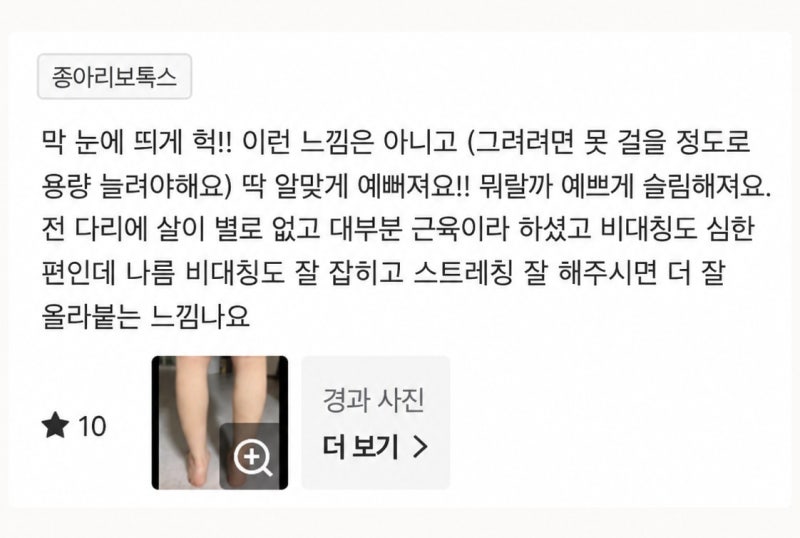
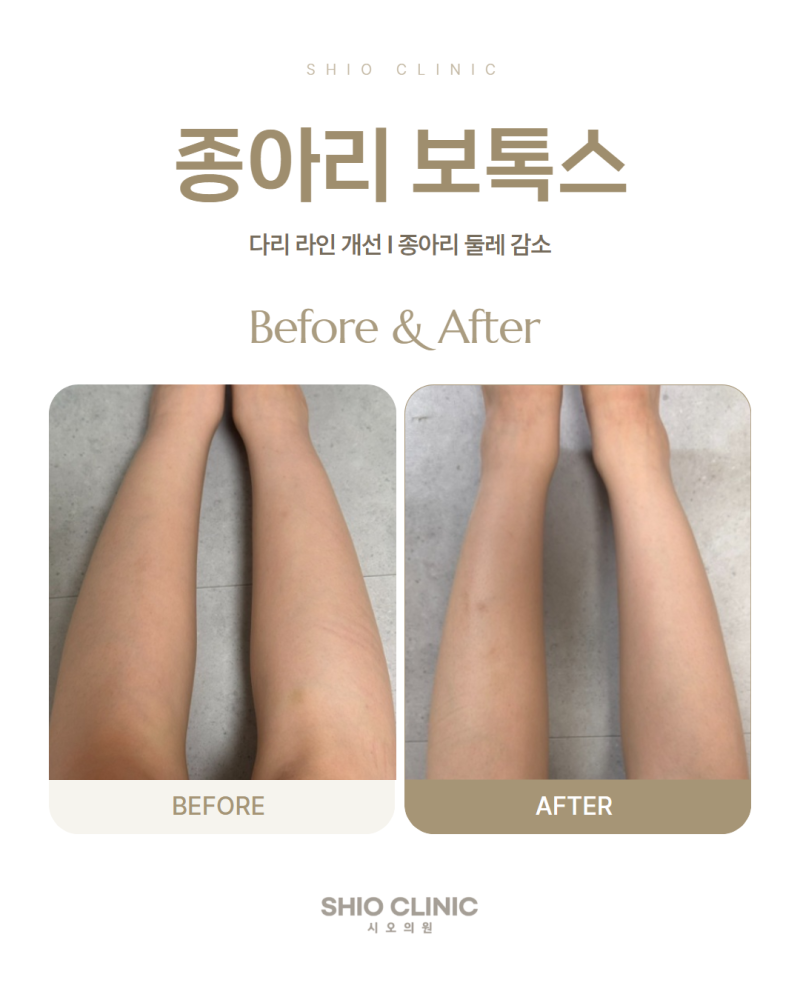
However, the amount of reduction or general effects
cannot be accurately assessed based on personal perception or photos alone.
The contour in photos can appear different depending on the toe direction, knee angle,
the degree of muscle tension, and the shooting distance.
Before and after comparisons should be conducted under the same conditions as much as possible,
and circumference measurements and walking status should be checked together.
The duration of the effect also varies individually,
so repeat procedures should be decided after observing the progress.
6. Post-Procedure Weakness and Management: Be Sure to Check
After the procedure, pain, bruising at the injection site,
and temporary muscle weakness may occur.
The 'feeling of weakness' should also not be interpreted
as a sign of good effect.
If you have difficulty walking or experience significant fatigue,
you should inform the medical professional who performed the procedure,
rather than trying to endure it by increasing exercise.
Do not press or massage the injection site strongly,
and adjust the start time and intensity of exercise and stretching
according to the guidelines provided.
Stretching extensively does not necessarily increase the effect.
You must also inform us in advance about previous Botox treatments, medications you are taking,
and whether you have any nerve or muscle disorders.
The starting point for improving calf lines
is to precisely distinguish the cause of the thickness.
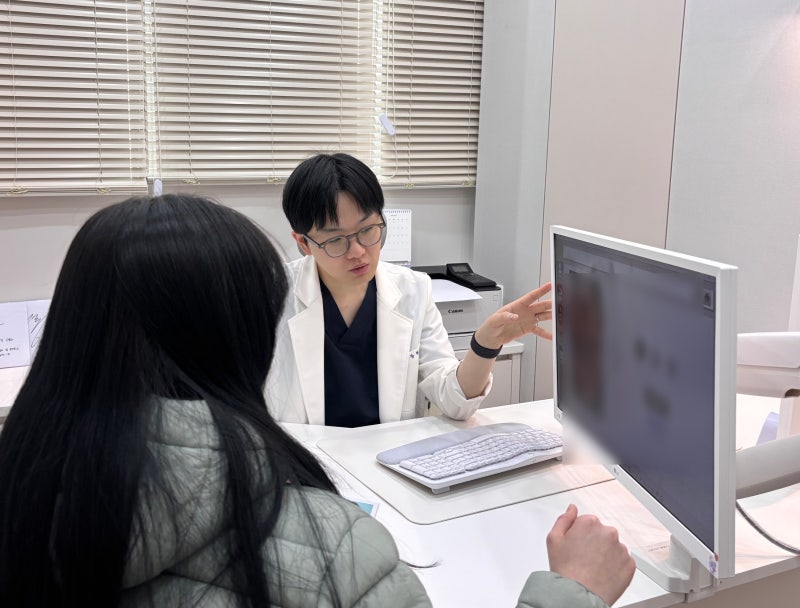
When consulting at Sio Clinic, please provide specific details
about your usual swelling, exercise habits, and desired changes.
By considering both muscle contour and leg function,
you can determine the appropriate treatment direction for yourself.
This article is adapted from SHIO Clinic's official Naver blog.
Have questions about your skin?
Book a consultation and let SHIO Clinic's diagnosis guide you to the right treatment.