Seongsu Ultrasound Botox, Even in the Same Area
Why Injection Sites Differ
Hello, this is Sio Clinic.
"Doctor, when I get jawline Botox,
what's different when you use ultrasound?"
You might wonder why it's necessary to look at the screen again when you can feel the muscles on the side of your jaw by clenching your teeth.
If you're considering Seongsu Ultrasound Botox,
here's what to look into first.
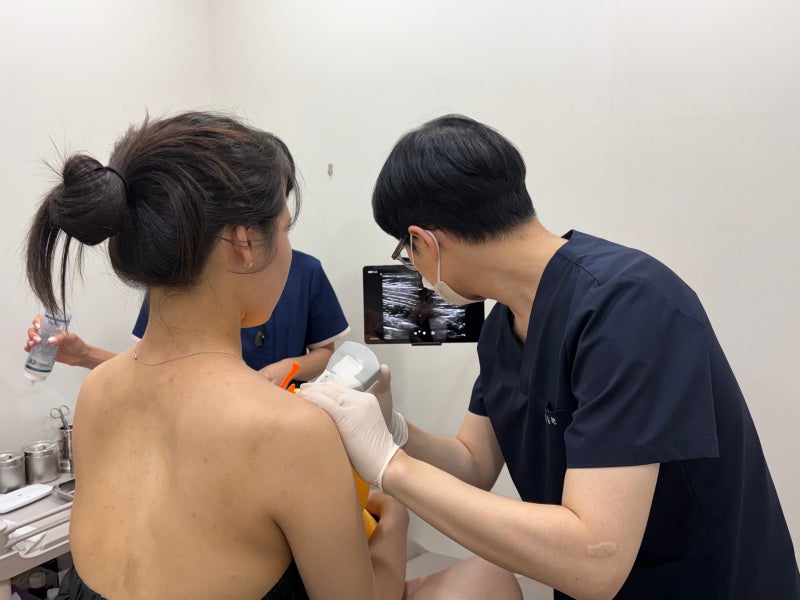
Finding muscles from the outside is different from confirming which tissue the needle tip has reached.
Today, using jawline, submandibular gland, corner of the mouth, and calf as examples,
we will explain step-by-step what is examined with ultrasound for each area,
and what the precision mentioned in research means.
Ultrasound Before and During Injection
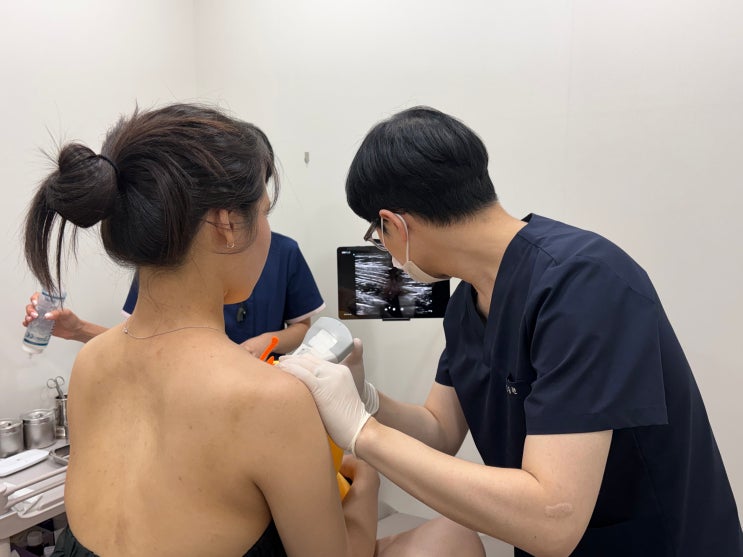
Pre-procedure ultrasound allows us to examine the location and depth of the target tissue,
and its relationship with surrounding structures.
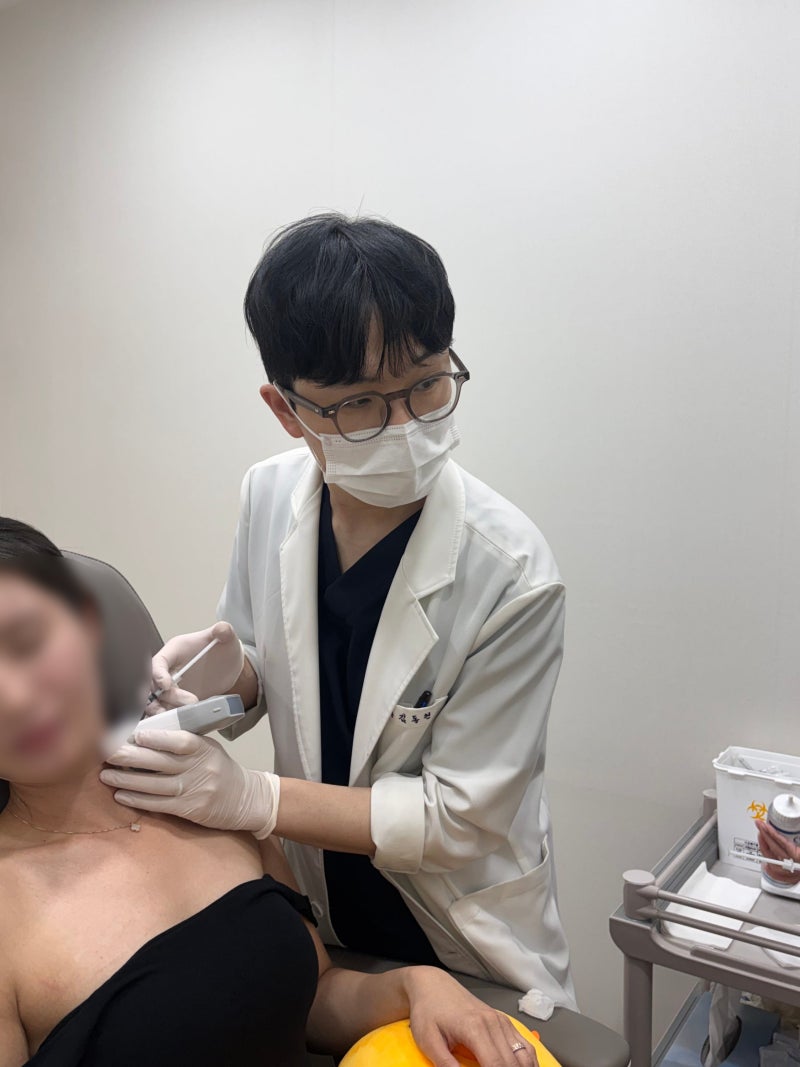
For the jawline, it involves checking the border and thickness of the masseter muscle.
For the submandibular gland, it involves checking where the salivary gland meets surrounding muscles.
This is how we examine the area.
Real-time Ultrasound Guidance Monitors
the Needle Tip and Target Tissue Position
During Injection.
This is akin to the difference between looking at a map before starting a journey
and checking your current location while traveling.
Jawline Botox: Masseter Muscle Thickness Varies
The muscle that feels firm on the side of your jaw when you clench your teeth
is the masseter muscle.
The most prominent point serves as a clue to find the masseter muscle,
but it's impossible to know the entire shape and thickness of the muscle from that single point.
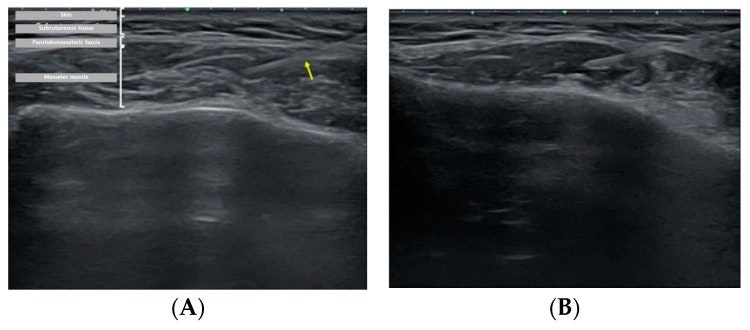
A 2024 study injected botulinum toxin into the left and right masseter muscles of 50 individuals
in different ways.
One side used anatomical landmarks visible from the skin's surface,
while the other side used ultrasound guidance.
After one month, both methods showed a reduction in masseter muscle thickness,
with a greater reduction observed in the ultrasound-guided group.
However, this study only compared muscle thickness after one month.
We cannot determine from these results how long the effects last
or how much side effects are reduced.
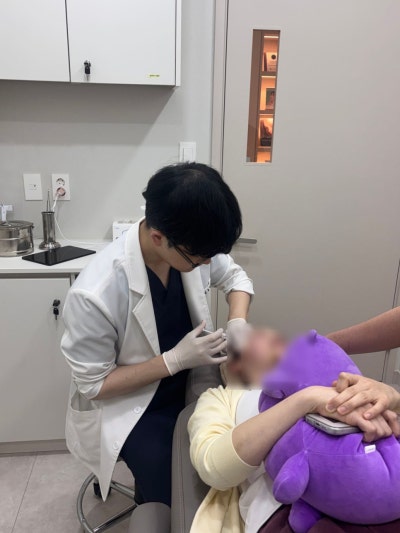
If you are considering Seongsu Ultrasound Botox for jawline contouring,
it is advisable to first assess how much the masseter muscle contributes
to the width of your jawline.
The reduction in muscle thickness and the change in facial lines you desire
should be considered separately.
Submandibular Gland Botox: What 92% Precision Means
The submandibular gland produces saliva.
There are muscles involved in swallowing nearby,
so when locating the gland, the border with surrounding muscles must also be examined.
In a 2017 study using donated human cadavers,
the rate of reaching the target submandibular gland was 50% without ultrasound,
and approximately 92% with ultrasound guidance.
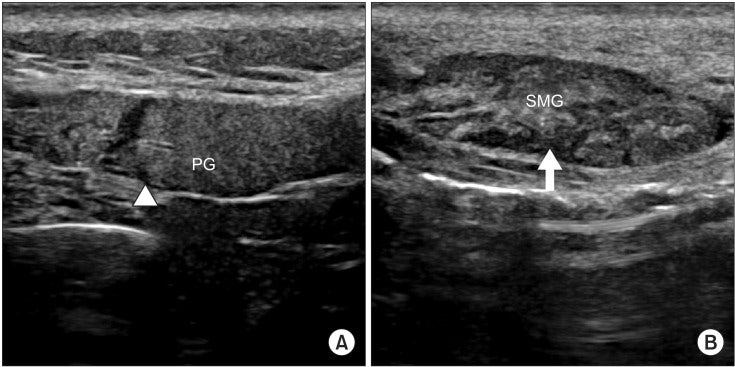
This refers to the percentage of needle insertions that reached the target tissue in the specimens.
It is not a comparison of the actual incidence of dysphagia in patients.
If you hear explanations like 'more precise' when researching Seongsu Ultrasound Botox,
examine the criteria used for comparison.
Whether the needle reached the target tissue and the patient's experience
after the procedure are different questions.
|
Treatment Area
|
Structure Examined
|
Reason for Examination
|
|
Jawline · Masseter Muscle
|
Border and thickness of masseter muscle, buccinator muscle used when smiling
|
Distinguishes the masseter muscle from adjacent facial muscles.
|
|
Submandibular Gland
|
Depth of salivary gland, border with surrounding mylohyoid muscle
|
Distinguishes the salivary gland from muscles involved in swallowing.
|
|
Corner of Mouth · Depressor Anguli Oris (DAO)
|
Target muscle and surrounding facial muscles/blood vessels
|
Examines the position of structures close to the corner of the mouth.
|
|
Calf · Gastrocnemius Muscle
|
Outer gastrocnemius muscle and soleus muscle underneath
|
Used to assess the thickness and borders of muscle layers.
|
Even with the same Botox procedure,
for the jawline, we examine the muscle's border and thickness,
and for the submandibular area, the position of the salivary gland and surrounding muscles.
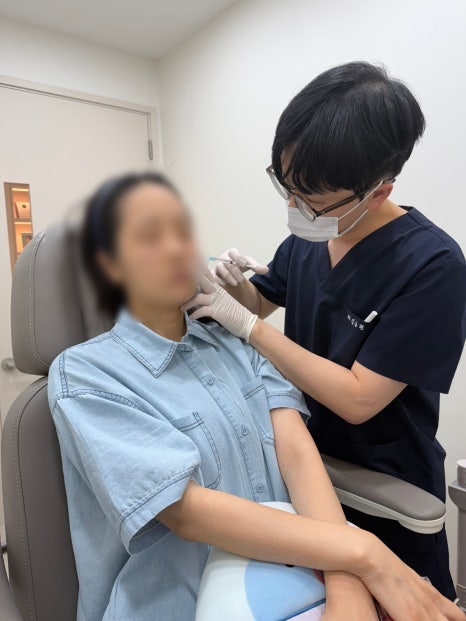
During a Seongsu Ultrasound Botox consultation,
asking what structures are being examined in the area you are concerned about
will make it easier to understand the explanation.
During Consultation, Start by Discussing the Area You Want to Change
If you are considering Seongsu Ultrasound Botox,
please first tell us whether the width of your jawline is bothering you,
or if the fullness under your chin when you lower your head is
a greater concern.
If you have had Botox before,
it would be helpful to also share the treatment area, timing, and any discomfort experienced
during chewing or swallowing afterward.
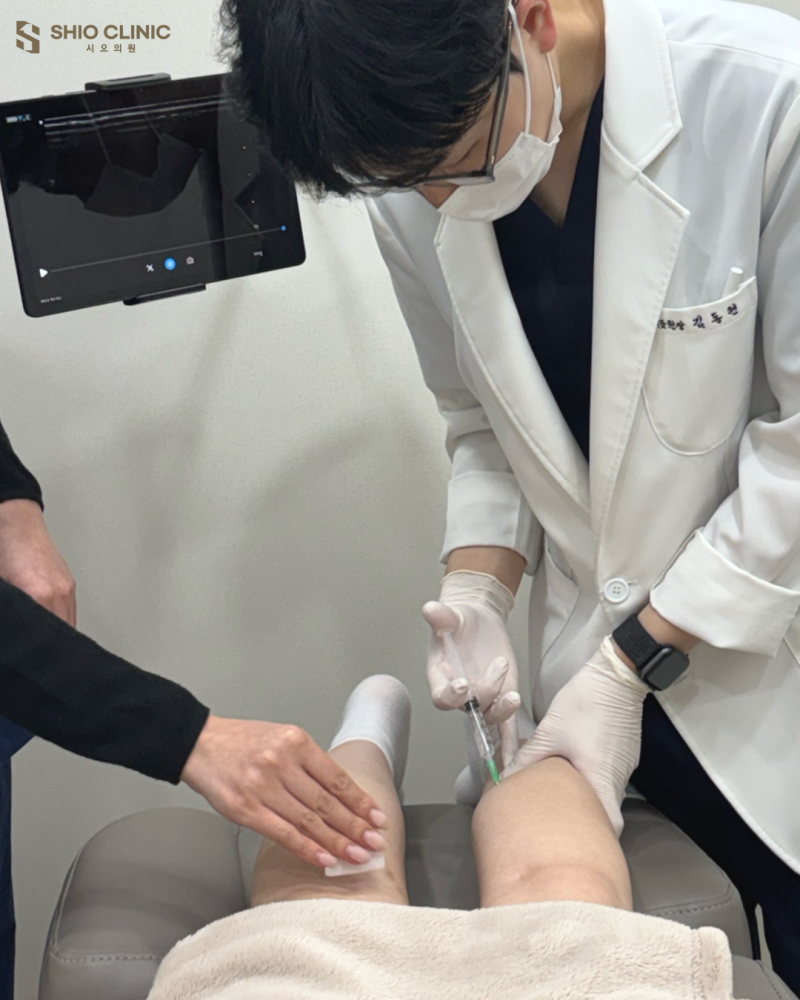
Just because a specific tissue is visible on the ultrasound screen does not mean
that treatment is necessary there.
We must first consider how much that tissue affects your current contour,
and whether the desired change aligns with the treatment goal.
This is the starting point for a consultation.