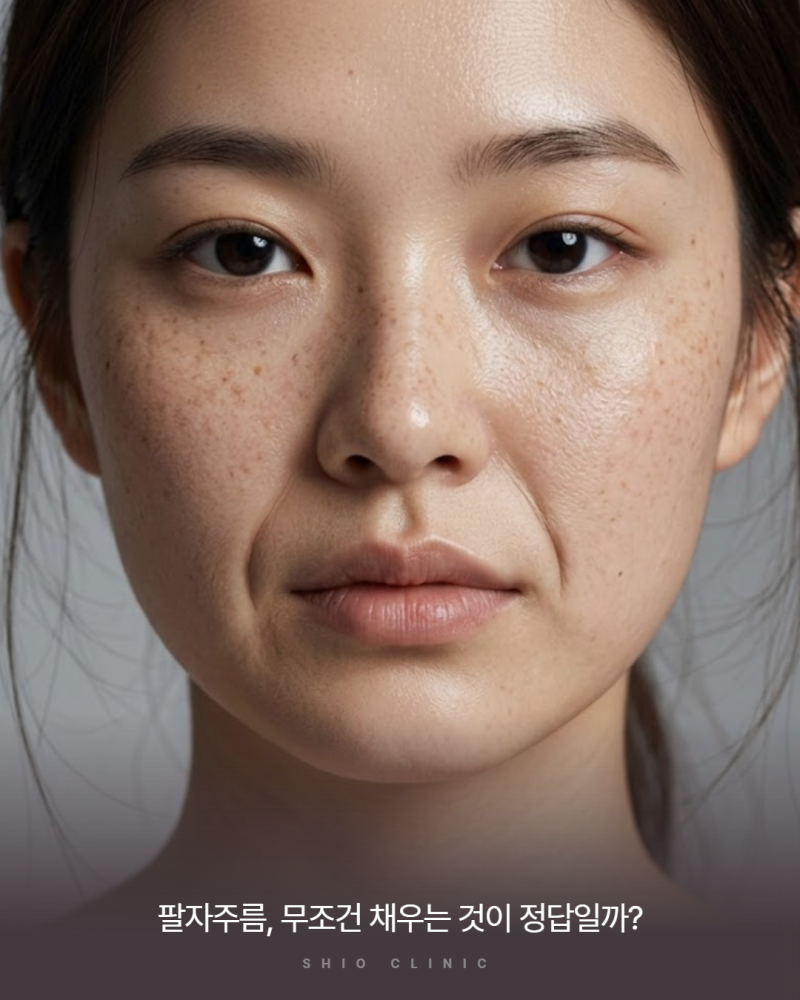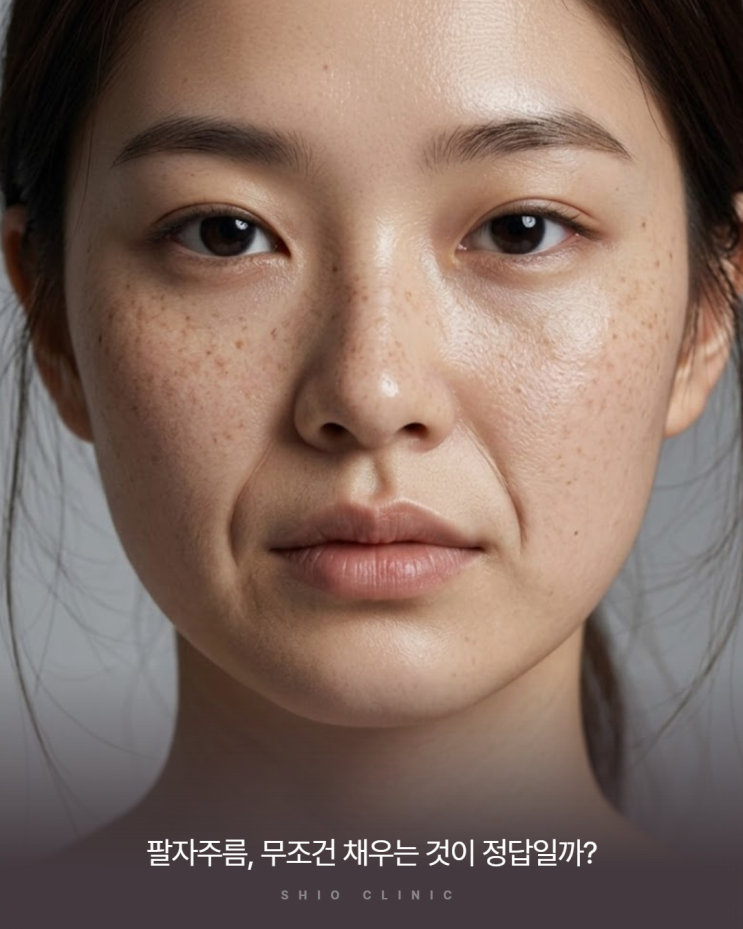
[Trimage Sio Clinic] Nasolabial folds, is filling them up unconditionally the right answer?
![[Trimage Sio Clinic] Nasolabial folds, is filling them up unconditionally the right answer?](https://d2pfwwt98s720h.cloudfront.net/clinic-blog/5/224211108264/ab9db638e7bb6ccb4751b9112936e78e7b122eca.png)
Trimage Sio Clinic: Nasolabial folds,
Is filling them up unconditionally the right answer? <Column>
Trimage, Sio Clinic
Hello, this is Trimage Sio Clinic.
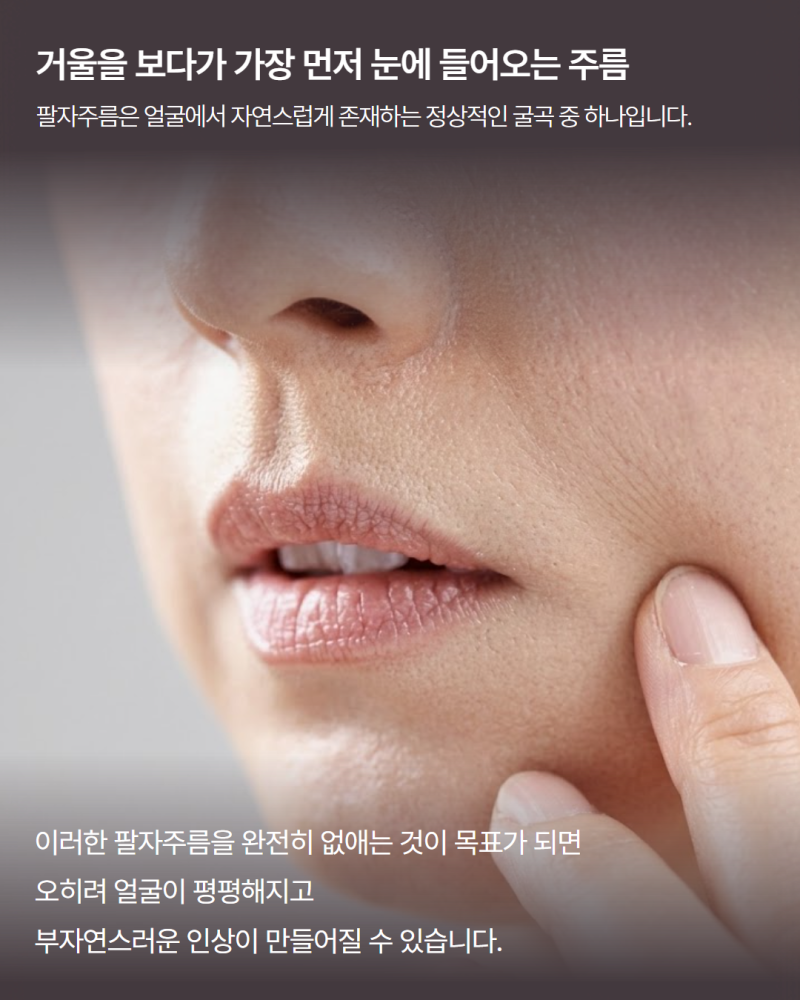
One of the first wrinkles that catches the eye when looking in the mirror is the nasolabial fold. Many people think that nasolabial folds must be removed, but in fact, they are one of the normal curves that naturally exist on the face.
Even newborns have nasolabial folds. Therefore, if the goal is to completely eliminate them, the face may end up looking flat and unnatural.
For a natural facial line, it is important to maintain appropriate curves and three-dimensionality. For this reason, at Trimage Sio Clinic, we prioritize a design that considers the overall facial structure and balance rather than simply filling in the nasolabial folds.
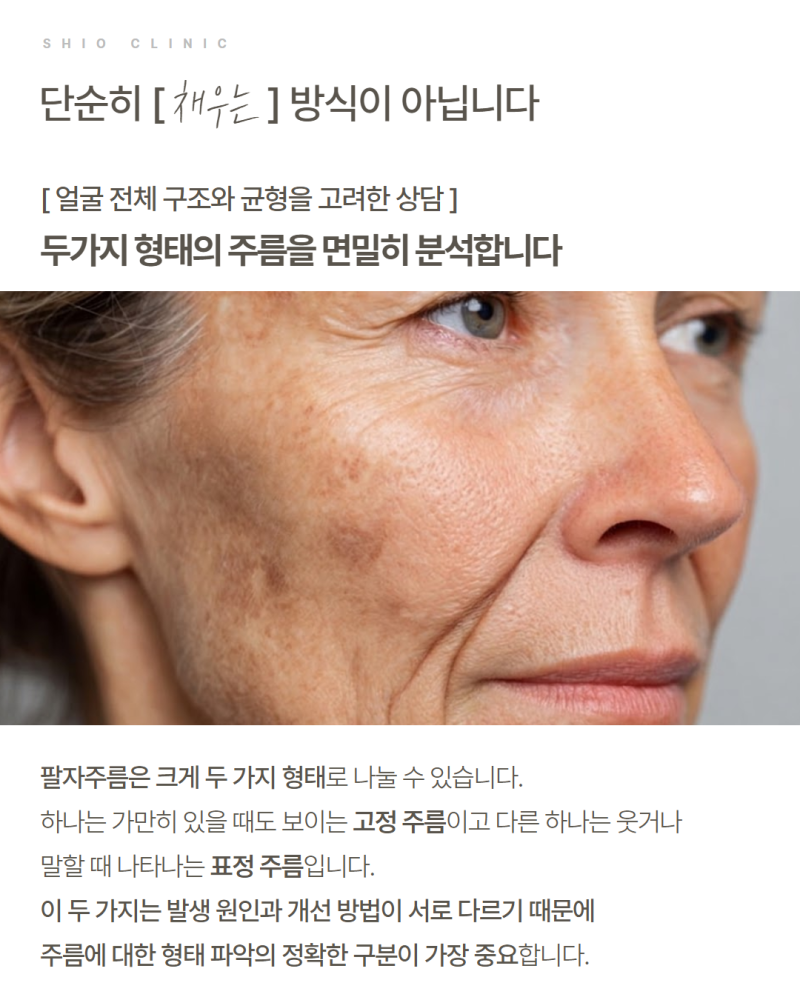
Nasolabial folds can be broadly divided into two types.
One is a static wrinkle that is visible even when the face is at rest, and the other is an expression wrinkle that appears when smiling or talking.
Since these two have different causes and improvement methods, accurate distinction is important.
First, static wrinkles refer to nasolabial folds that are present on the face even without making expressions.
These static wrinkles can occur as facial fat decreases or shifts with age, and they can also appear deeper as skin elasticity declines.
Also, as the facial support structure
weakens, the phenomenon of the
nasolabial area appearing sunken
can also occur.
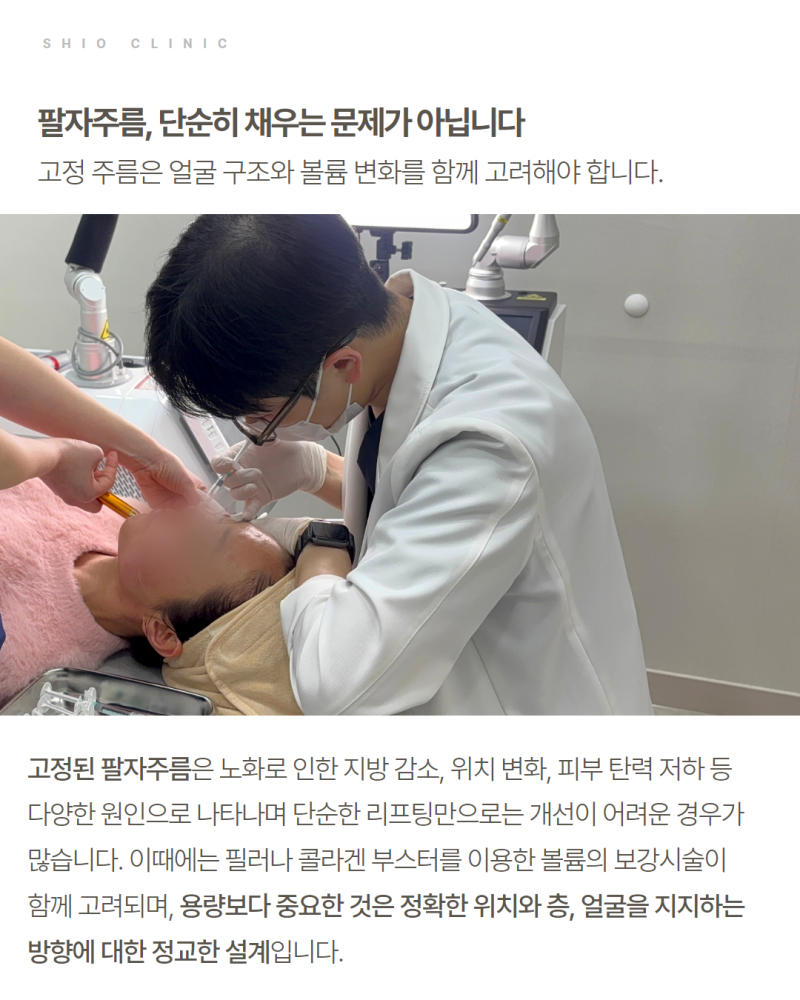
In such cases, it is often difficult to improve with simple lifting alone. While lifting procedures can be helpful, the nasolabial area is a location that structurally requires procedures that directly reinforce volume.
Therefore, volume-enhancing procedures such as fillers or collagen boosters are often considered together.
Generally, about 1cc to 2cc of volume per side is often used for nasolabial folds, but there are more important factors than the volume itself in actual procedures.
The precise location where the filler is placed, the layer into which it is injected, and the direction in which it supports the face are key. Even with the same volume, the results can vary greatly depending on the location and layer, so anatomical understanding and delicate design are very important.
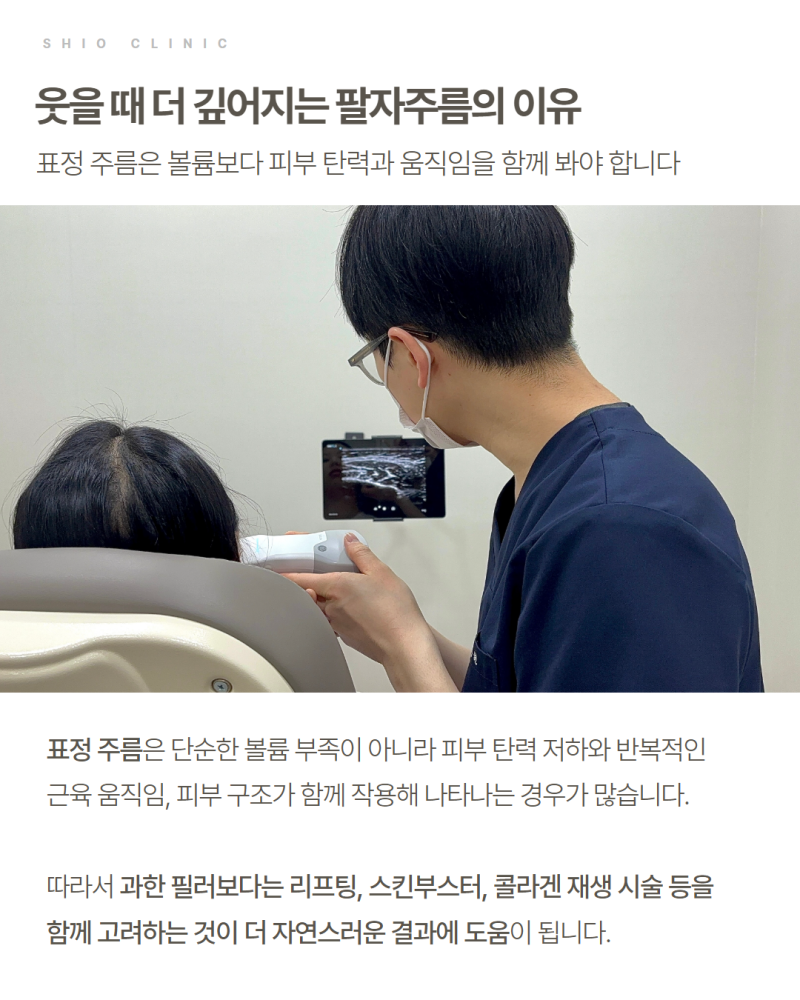
On the other hand, expression wrinkles refer to nasolabial folds that appear when smiling or talking. These wrinkles are not caused simply by a lack of volume, but occur due to a combination of factors such as decreased skin elasticity, repetitive muscle movement, and the skin structure that folds when making expressions.
Therefore, expression wrinkles are often difficult to improve sufficiently by simply filling in volume. In fact, filling in too much volume can make you look unnatural when smiling.
In such cases, considering lifting procedures that improve skin elasticity, wrinkle-improving lifting, and skin boosters or collagen regeneration procedures together helps create natural results. Another important point in nasolabial fold procedures is that excessive volume reinforcement can actually create an unnatural impression.
If you try to completely eliminate nasolabial folds by filling in volume excessively, the natural curves of the face may disappear, making the face look flat overall. Also, the area around the mouth may look dull or the face may feel puffy. Such changes can eventually collapse the structural three-dimensionality and create an unnatural impression.
For natural nasolabial improvement, you should not just look at the nasolabial area, but consider the balance of the entire face together.
In fact, when designing for nasolabial folds, we start by distinguishing whether they are static or expression wrinkles and check the situations in which the patient wants improvement. Some people want to improve the nasolabial folds visible from the front, while others are concerned about the nasolabial lines visible when taking photos. Others are concerned about wrinkles that deepen when smiling.
Accurately identifying these differences is the first step to creating natural results.
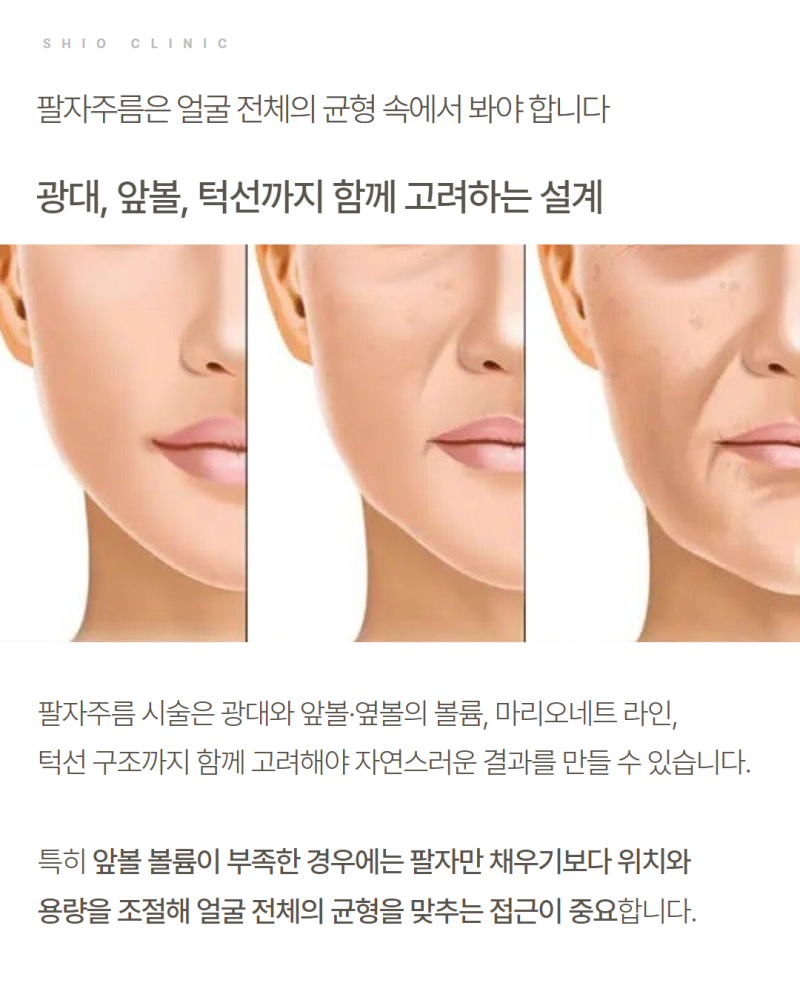
We must also consider the balance with the cheekbones, the volume status of the front and side cheeks, the presence of marionette lines that appear next to the mouth, and the jawline structure. For example, if there is a lack of volume in the front cheeks, filling only the nasolabial folds can make the face look more unnatural.
Conversely, if you do not want procedures on other areas, a method of adjusting the location or volume of the nasolabial procedure to match the overall balance is necessary.
Ultimately, the key to natural nasolabial fold improvement is
to perform the procedure in the correct location, in a balanced way, and without being excessive.
Nasolabial folds are not just a problem of one area but are connected to the entire facial structure, so it is difficult to create natural results if you approach it based on only one wrinkle.
You should not just look at the nasolabial depression, but consider the three-dimensionality of the face together to complete a more harmonious facial line.
At Trimage Sio Clinic, we conduct personalized nasolabial designs based on this anatomical structure and facial balance.
If you are worried about where to get your
first lifting or first skin procedure
properly,
join Sio!
本文根据 SHIO 医院官方 Naver 博客原文重新整理。