
How to Slim Your Neck: Why You Need to Examine the Sternocleidomastoid Muscle First with Slim Neck Botox
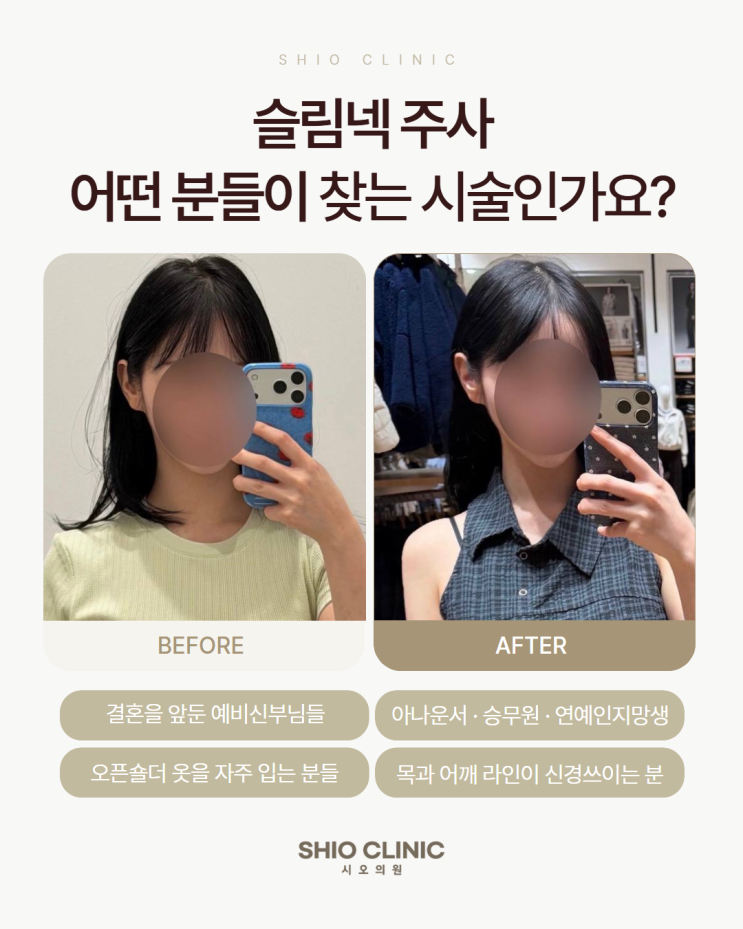
How to slim your neck with
Slim Neck Botox:
The Reason to Examine the Sternocleidomastoid Muscle First
Hello. This is Sio Clinic in Seongsu.
While people often pay a lot of attention
to facial or body shape management,
the thickness or line of the neck is a part
that is relatively easy to overlook.
However, when taking photos or
wearing clothes that reveal the neckline,
you might feel self-conscious about your neck
appearing short and thick.
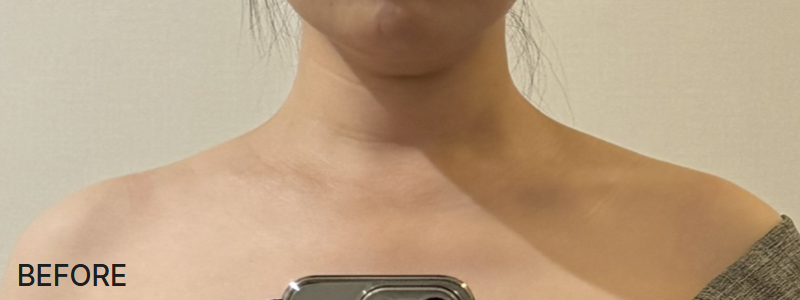
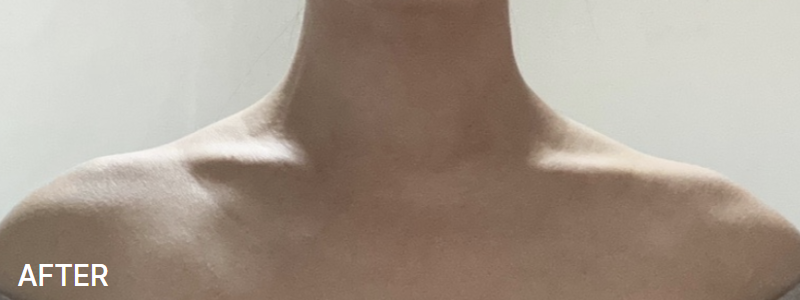
Especially for those preparing for wedding photos
or choosing off-the-shoulder outfits,
the overall line from the neck to the collarbone
and shoulders is of great interest.
Common methods for slimming the neck
include weight loss, massage, and stretching.
However, if the thickness of your neck
doesn't change significantly despite
sufficient dieting, other causes need to be examined.
This is because the reason for a thick-looking neck
is not solely due to fat.
1. Why Your Neck Looks Thick Even After Dieting
The causes for a thick-looking neck
vary from person to person.
Factors such as subcutaneous fat distribution,
skin thickness, skeletal structure, and posture
play a role, and the degree of muscle development
around the neck is also an important factor.
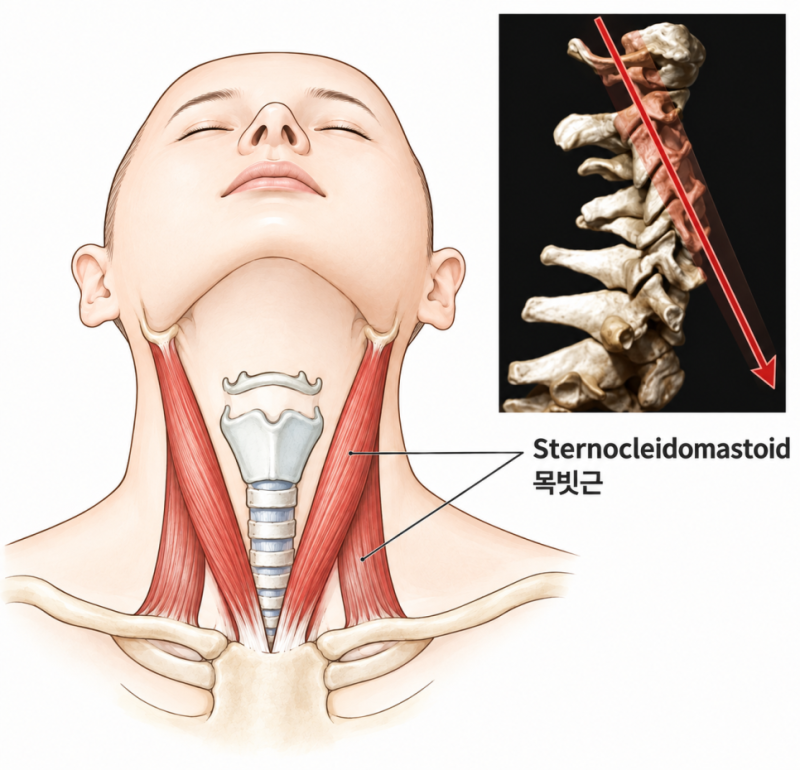
Among these, the muscle to examine
is the sternocleidomastoid muscle.
The sternocleidomastoid muscle starts behind the ear,
runs diagonally along the sides of the neck,
and extends to the collarbone and sternum.
It is involved in movements such as turning
the head left and right or tilting it sideways,
and also plays an important role in maintaining
head and neck posture.
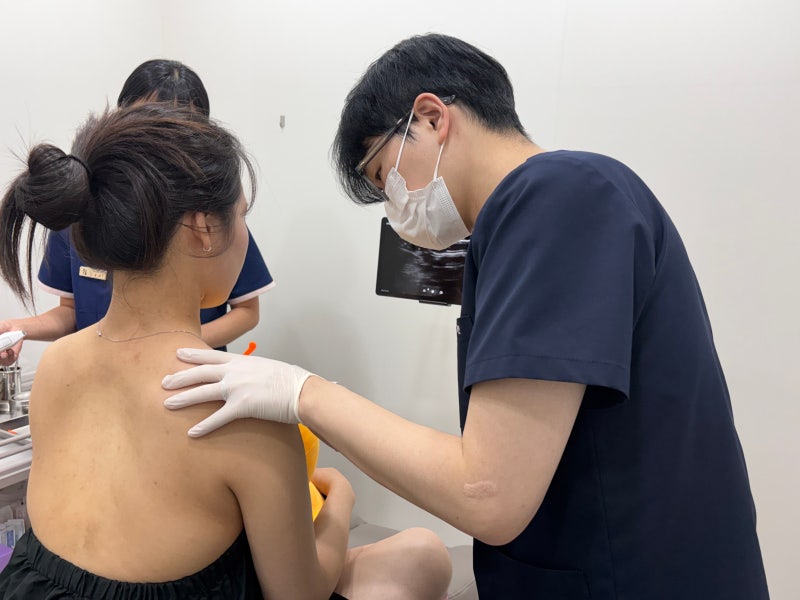
If you turn your head to the side while looking
in the mirror, you can see the muscle
protruding long along the side of your neck.
The thickness of this muscle can vary
depending on an individual's physique
and congenital development.
Furthermore, the degree of tension or
external protrusion can appear differently
depending on posture and muscle usage habits.
If the sternocleidomastoid muscle is relatively developed,
the side line of the neck may be prominent,
giving the impression that the neck is thicker
or shorter than it actually is.
Therefore, when looking for ways to slim the neck,
it is important to first identify the structural cause
of neck thickness, rather than solely trying to reduce fat.
2. Slim Neck Botox: How Does It Manage Necklines?
If the development of the neck muscles
affects the neckline,
you can consider consulting about
Slim Neck Botox.
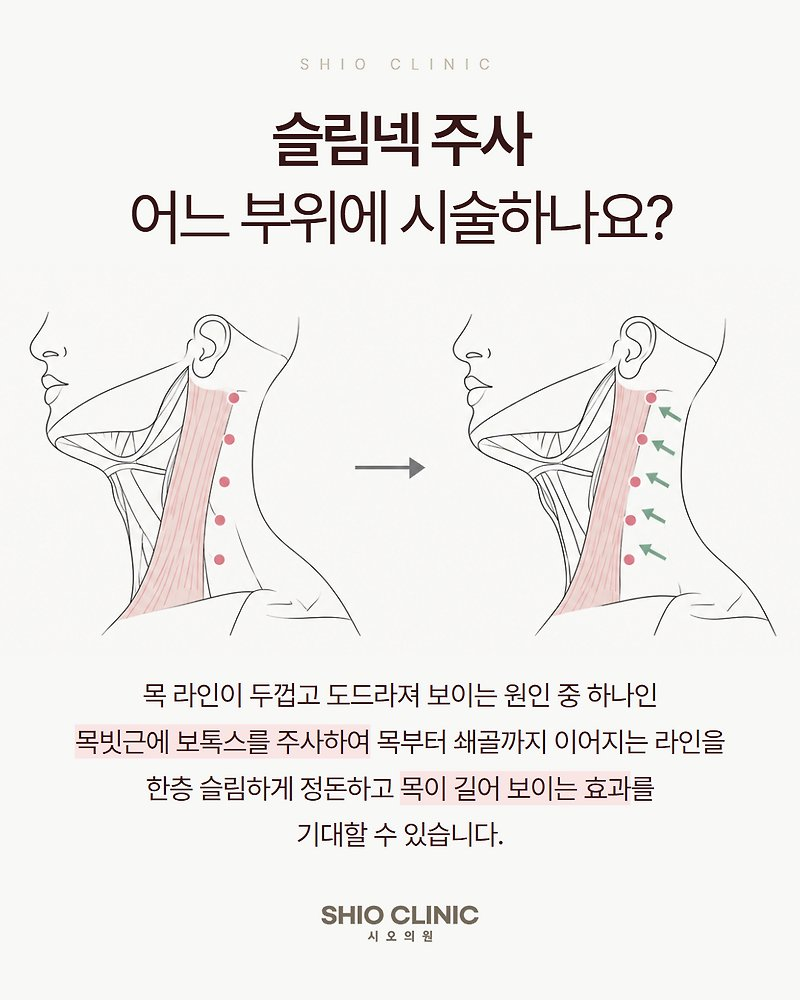
Slim Neck Botox utilizes the principle
of temporarily reducing muscle contraction
by injecting botulinum toxin into the
sternocleidomastoid muscles located on both sides of the neck.
Botulinum toxin works by inhibiting the signals
transmitted from nerves to muscles, thereby weakening
muscle movement.
Through this action, muscle volume can
gradually decrease, and in cases of developed
sternocleidomastoid muscles, a change
where the thickness of the side neck line is alleviated
can be expected.
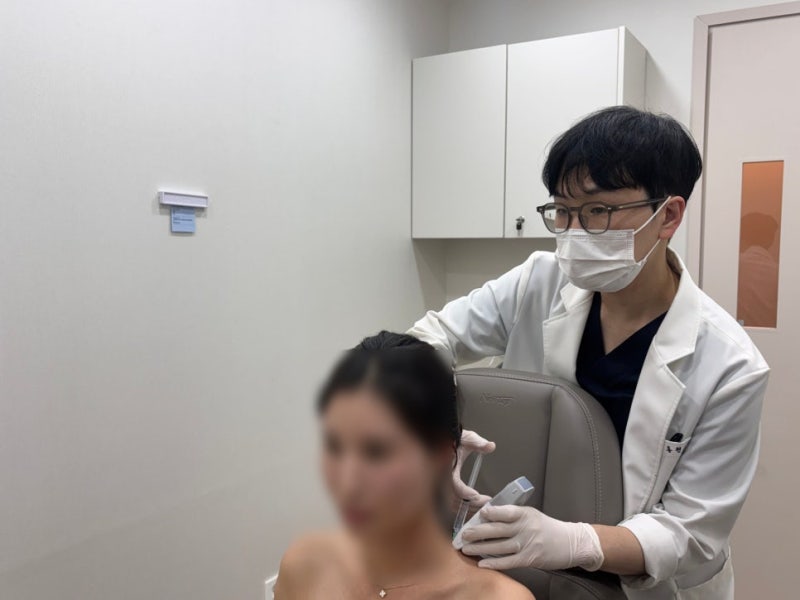
However, this does not actually lengthen the neck.
As the protrusion caused by the muscles decreases,
the contour from the neck to the collarbone
may appear relatively smoother and slimmer.
Additionally, Slim Neck Botox is sometimes
confused with trapezius Botox.
Slim Neck Botox targets the sternocleidomastoid
muscles on the sides of the neck, while trapezius Botox
primarily targets the muscles on the upper shoulders.
Therefore, it is necessary to distinguish which
muscle area, the neck or the shoulders, affects the overall silhouette.
Specifically, for cosmetic Botox procedures targeting
the sternocleidomastoid muscle, research on efficacy
and safety is limited, so the suitability of the procedure
must be carefully evaluated.
3. Slim Neck Botox: Who Is Interested in This Procedure?
The neckline connects the face and shoulders,
influencing the overall proportions of the upper body.
Especially when the neck and collarbones are exposed,
the neck's thickness or left-right balance
can become more noticeable than usual.
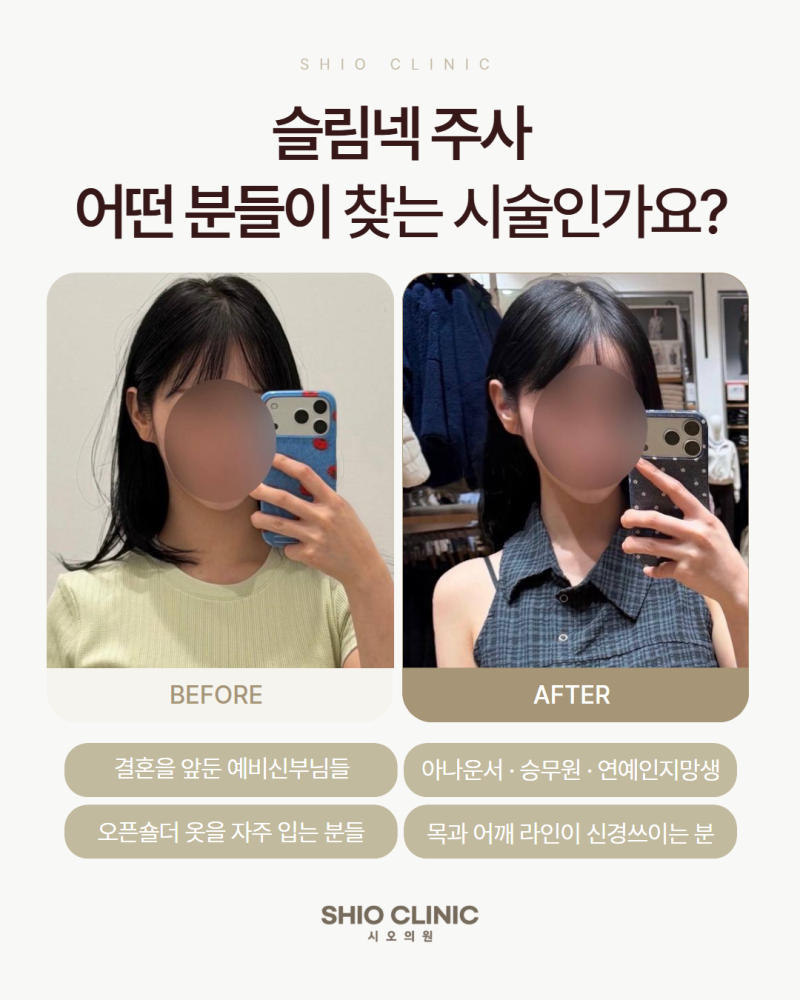
Slim Neck Botox for slimming the neck is a procedure
that attracts interest from individuals with the
following concerns:
✔ Brides-to-be
Wedding dresses often reveal the neck, shoulder,
and collarbone lines.
Especially if preparing for an off-the-shoulder dress,
one might want to check the balance and contour
of the neckline in advance.
✔ Aspiring Announcers, Flight Attendants, and Celebrities
Individuals who need to appear before cameras
or maintain a neat image may be interested
in the proportions of their neck and shoulders.
✔ Those Who Enjoy Wearing Off-the-Shoulder Outfits
If having a thick or short-looking neck has been
a long-standing concern, one can check the degree
of muscle development.
✔ Those Whose Necklines Remain a Concern After Weight Loss
If the side neck line still appears prominent
after dieting, examining causes other than fat
can be helpful.
However, not everyone with these concerns
is a candidate for the procedure.
This is because neck shape is influenced by
various factors, including not only muscles
but also subcutaneous fat, bone structure, and posture.
At Sio Clinic, we aim to comprehensively assess
each individual's neck shape, muscle development,
left-right symmetry, and the balance of the
collarbone and shoulder lines.
※ Before-and-after comparison photos are individual cases and may vary depending on shooting conditions. Procedure results may vary from person to person.
4. Sternocleidomastoid Botox: Why Precise Diagnosis Before the Procedure is Crucial
The sternocleidomastoid muscle is not just a muscle
that creates the external neck line.
It plays a crucial role in moving the head
and maintaining the stability of the head's position.
Additionally, major blood vessels, nerves,
and muscles involved in swallowing are located
nearby around the neck.
Therefore, sternocleidomastoid Botox for slimming the neck,
like other cosmetic procedures, requires precise
anatomical understanding, and functional aspects
must be carefully considered.
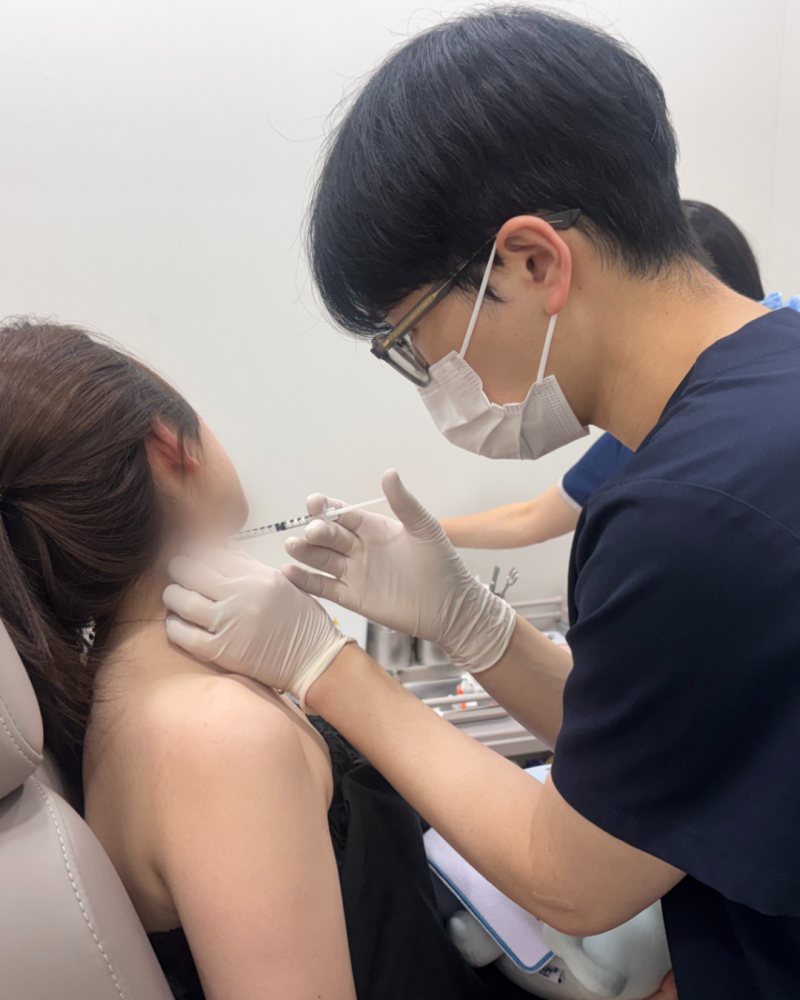
If the effect of botulinum toxin is excessive
or affects surrounding muscles, neck muscle weakness,
difficulty in movement, or swallowing difficulties
may occur.
Rarely, severe adverse reactions affecting breathing
are also possible, so thorough explanation and
consultation are necessary before the procedure.
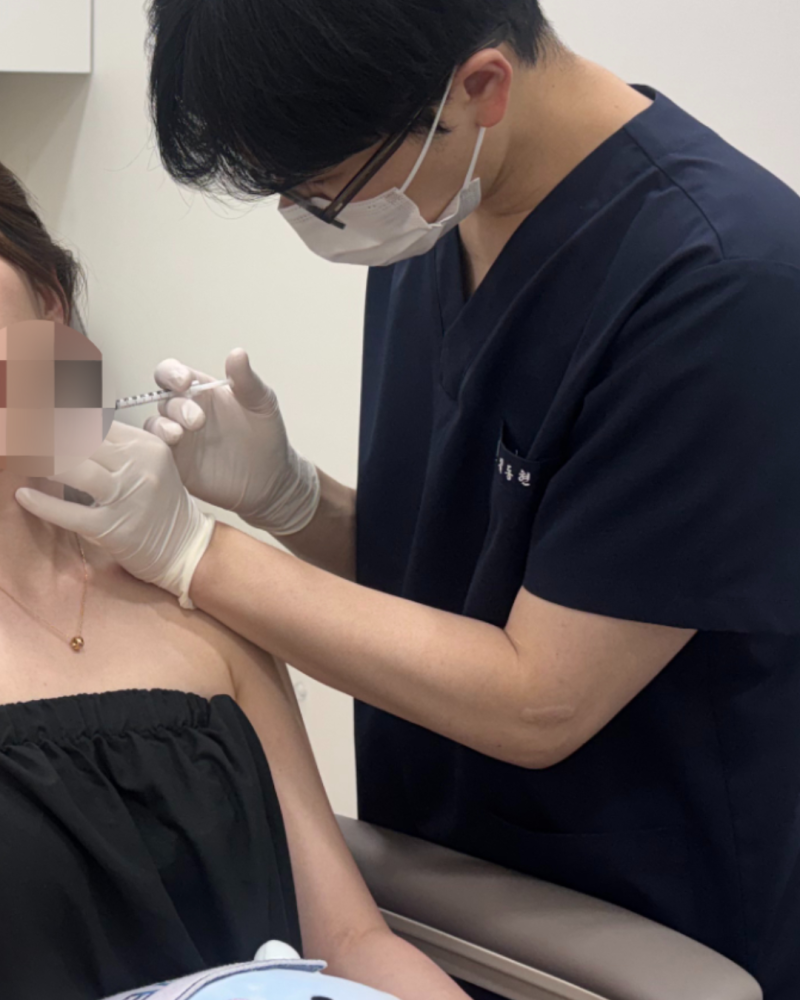
If you have weak neck muscles,
difficulty swallowing, or neuromuscular diseases,
you must inform the medical staff.
Furthermore, the onset of effects and
duration of results can vary depending on
individual muscle condition and procedure parameters.
At Sio Clinic, we believe it is important
to assess the possibility of a procedure
by examining not only the neck's shape
but also its muscle function, rather than solely
focusing on making the neck slimmer.
5. A Slim Neckline: The Key is Individual Balance
Among those considering how to slim their neck,
some focus on reducing the numerical value
of the neck circumference.
However, the beautiful proportion of the neck
is not determined solely by circumference.
The angle from the face to the jawline,
the length and contour of the neck muscles,
and the height of the collarbone and shoulders
all work together.
Therefore, repeatedly undergoing specific procedures
without precisely differentiating the cause of
a thick-looking neckline may not be advisable.
The management approach can vary depending on
whether the cause is sternocleidomastoid muscle development,
significant subcutaneous fat, or characteristics of posture
or bone structure.
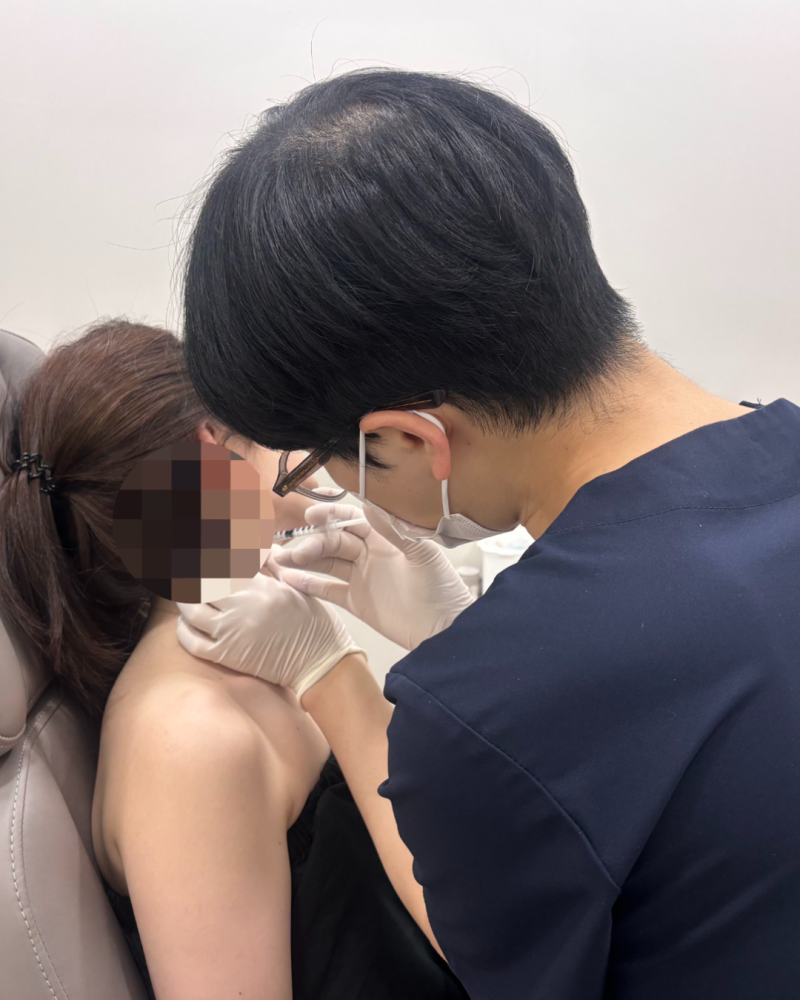
The important thing is not the strongest procedure,
but finding the method that is right for you.
Sio Clinic carefully examines individual body structures
and the characteristics of the neck muscles,
aiming for treatments that consider natural balance.
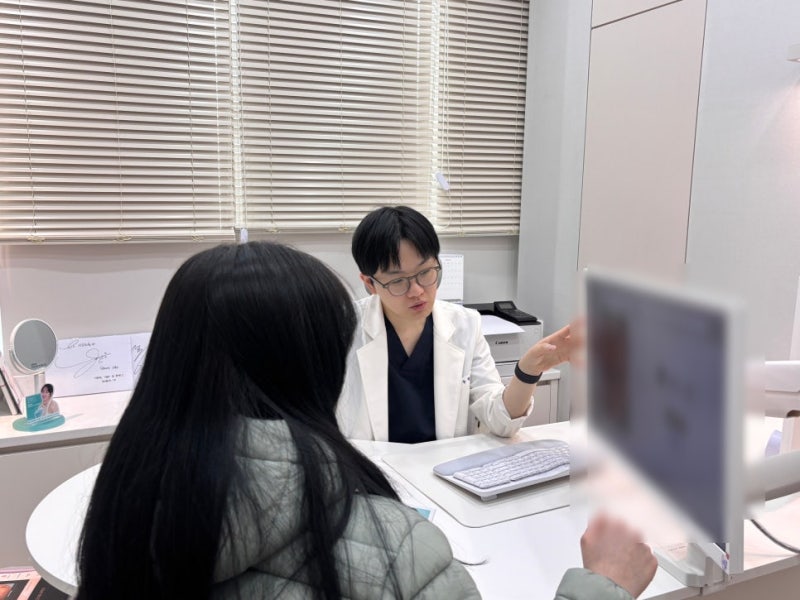
If you are concerned about a thick or short-looking
neckline, rather than immediately deciding on a procedure,
it is recommended to first identify the cause.
A natural neck and shoulder line begins with
understanding your individual structure.
This article is adapted from SHIO Clinic's official Naver blog.
Have questions about your skin?
Book a consultation and let SHIO Clinic's diagnosis guide you to the right treatment.