一覧へ戻る
피부 질환 정보

[Seoul Forest/Seongsu] Skin treatments to shrink pores, why treating nose pores is difficult

2026年4月13日shioclinic
[Seoul Forest/Seongsu] Skin treatments to shrink pores, why treating nose pores is difficult

Skin treatments to shrink pores,

why treating nose pores is difficult

Seoul Forest Seongsu Skin Treatment I Sio Clinic

Hello, this is Sio Clinic

in Seoul Forest, Seongsu.

There is a point I explain most frequently

to patients in the consultation room

regarding why treating nose pores is particularly difficult.

Many people visit with the

simple goal of “wanting to shrink pores,”

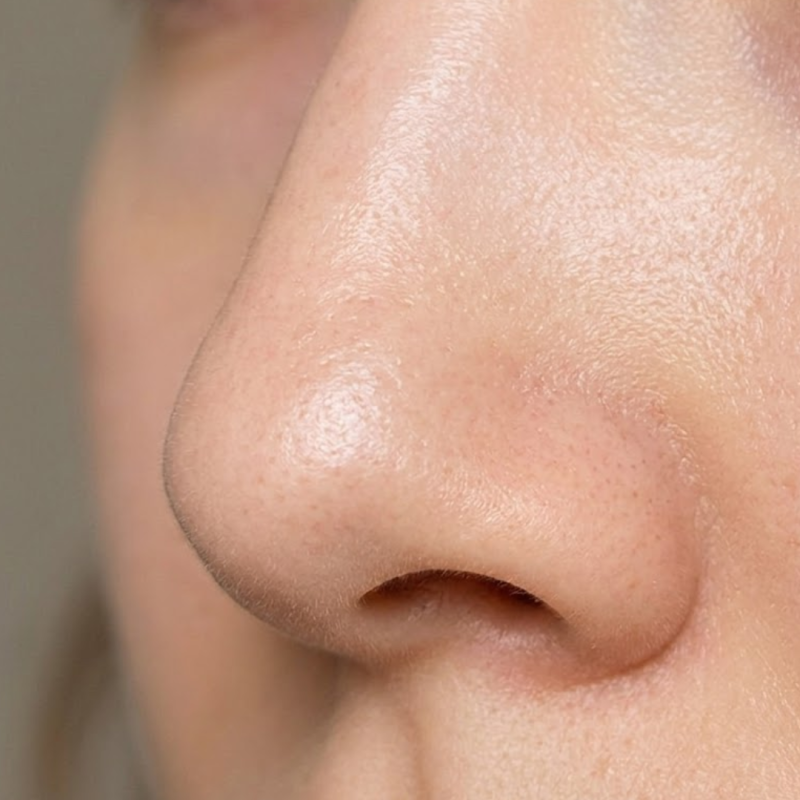
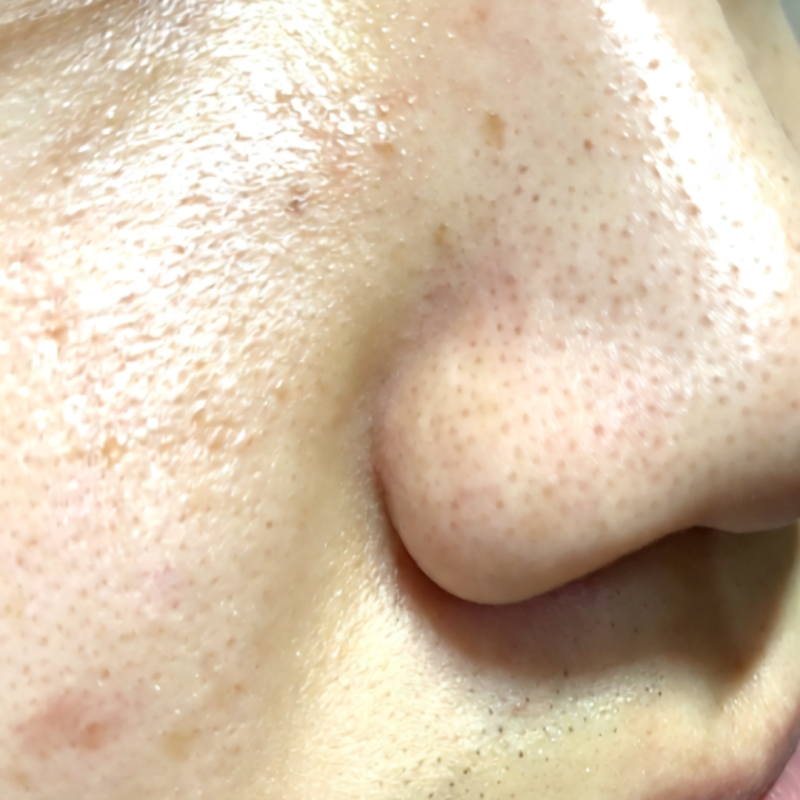
but in reality, nose pores have structural characteristics

that make them difficult to resolve with such a simple approach.

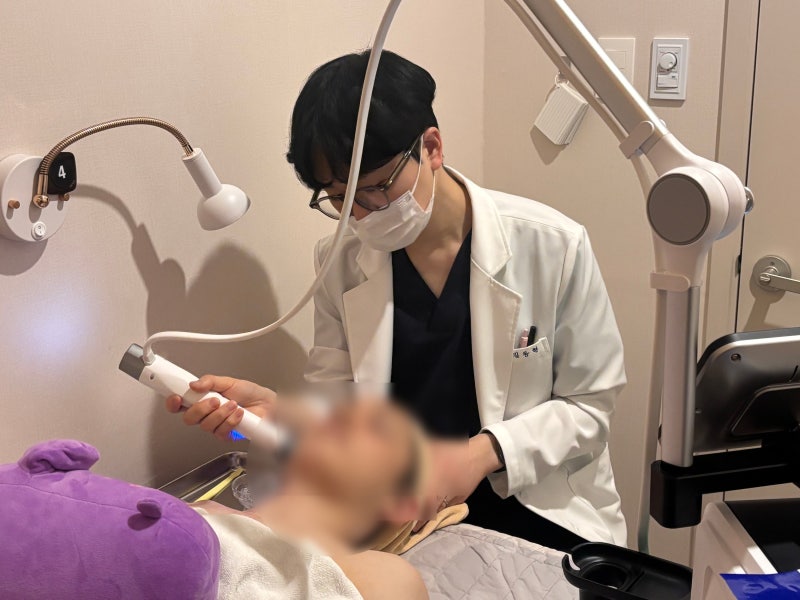
Nose pore treatment I Seongsu Seoul Forest pore treatment Sio Clinic

First, the nose is an area with a

very high density of sebaceous glands

compared to other parts of the face.

Not only is sebum production high,

but the skin itself is also relatively thick.

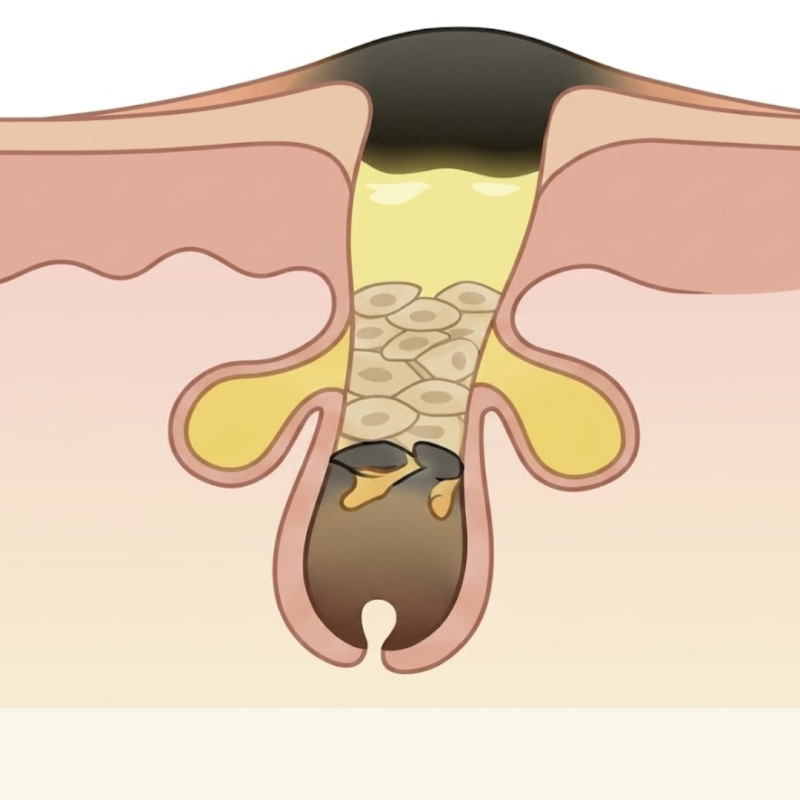
Furthermore, various contents such as sebum,

dead skin cells, and keratin

accumulate inside the pores,

and these elements become the cause

of continuous pore enlargement.

In other words, an approach that only tries to reduce the

pore size visible on the surface cannot be a fundamental solution.

Therefore, three factors must be considered together in nose pore treatment.

The first is sebum, the second is the skin surface condition, and the third is the structure of the dermis layer.

If these three are not improved in a balanced way, the treatment effect will inevitably be limited.

If we divide the causes of pore enlargement

more specifically, they can be explained

in three major types.

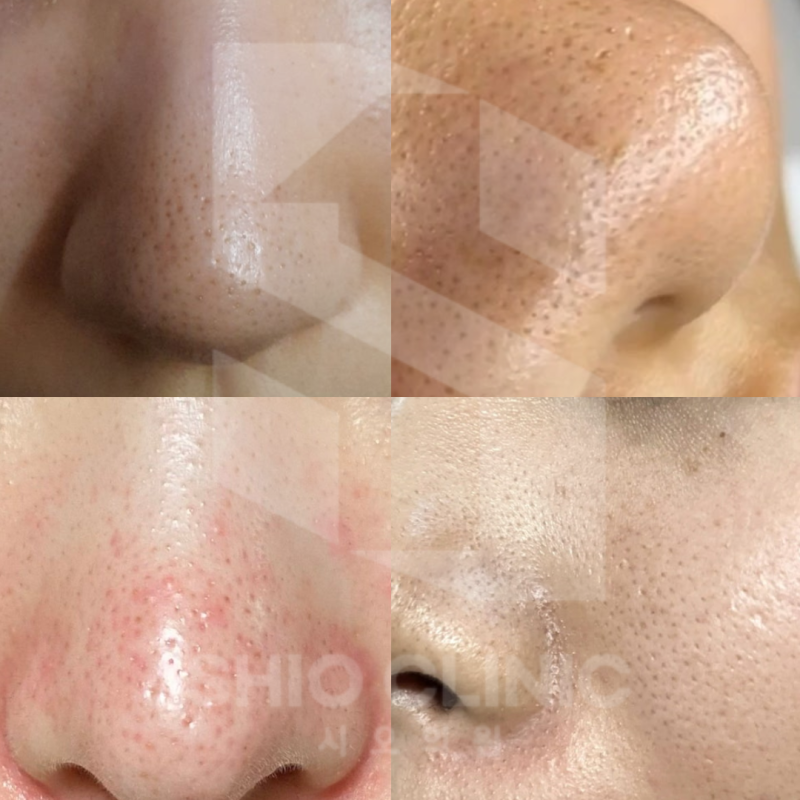
First is the sebum-type pore. This is when pores enlarge due to excessive sebum secretion. In this case, the approach is relatively simple; improvement is possible just by controlling excess sebum and keeping the inside of the pores clean.

Second is the elasticity-type pore. This is a form where pores stretch as collagen in the dermis layer decreases and elasticity drops due to skin aging. In this case, simple sebum removal is insufficient, and treatments that induce elasticity improvement and collagen regeneration must be performed in parallel.

Third is the scar-type pore. This occurs when tissue is damaged after acne or inflammation, leaving the pores in a pitted form. Once it progresses to this stage, a completely different approach from general pore treatment is required. It effectively enters the realm of scar treatment, and the treatment difficulty is also among the highest.

As such, because the treatment strategy changes completely depending on the type of pore, repeating the same procedure without an accurate diagnosis is not an efficient method. Especially as it progresses further—that is, toward elasticity-type or scar-type—treatment becomes more difficult and time-consuming.

Then, how should we approach

actual treatment?

Clinically, two major directions can be considered.

One is surface improvement, and the other is dermal remodeling.

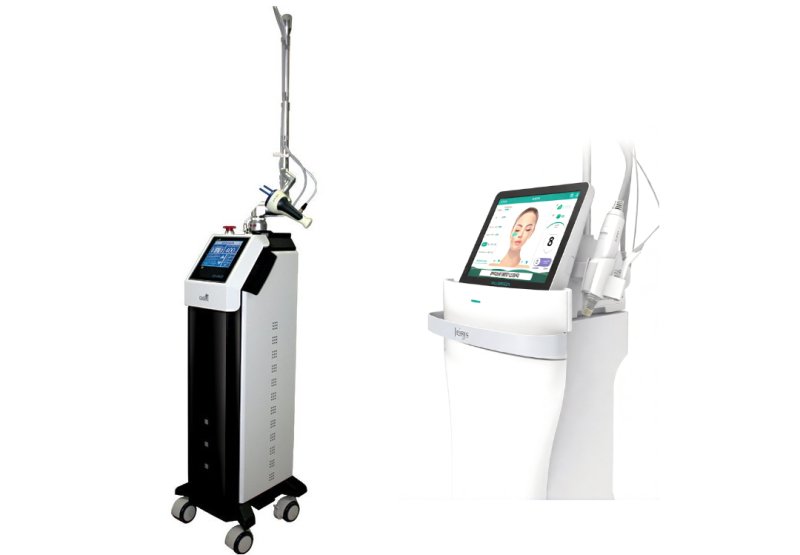
Fraxel-type lasers are commonly used for surface improvement.

These can help refine skin texture and clear away dead skin cells. However, in areas like the nose where the influence of sebum is significant, it is difficult to expect a fundamental pore-shrinking effect by only improving the surface. In other words, it is appropriate to understand it as an auxiliary role.

On the other hand, a more important axis is dermal remodeling. Needle RF-type treatments are representative of this, using high-frequency energy to provide micro-stimulation to the deep layers of the skin to induce collagen regeneration. This method helps structurally improve stretched pores and can be expected to be effective, especially for elasticity-type pores.

However, there is a most important premise here. That is sebum control. If sebum secretion remains excessive, the effect will inevitably be limited regardless of which laser or procedure is performed. Therefore, in actual practice, sebum control is often prioritized over procedures. Depending on the need, topical agents, lifestyle corrections, and skincare management are performed in parallel.

Also, regarding injection treatments

that many people are curious about,

they are a relatively limited choice for nose pores.

Because the skin tissue on the nose is firm and the area is small, it is difficult for the medication to spread evenly. Furthermore, there are limits to directly resolving the fundamental causes of pores, and the effect relative to pain is not significant. Since injecting medication densely is not realistically easy, it is difficult to consider it a high-priority treatment.

Ultimately, the core of nose pore treatment

is a step-by-step approach.

The first step is sebum control.

The second is surface management, such as dead skin cell clearing and blackhead removal.

However, since this stage only provides temporary effects, consistent management is required.

And finally, laser treatment for dermal remodeling must be performed in parallel to expect more stable improvement.

Nose pores are not a concept of “erasing” in a short period, but a process of accurately analyzing the cause and improving them one by one. This is why a customized approach that considers sebum, elasticity, and skin structure together is more important than simply trying to reduce pore size.

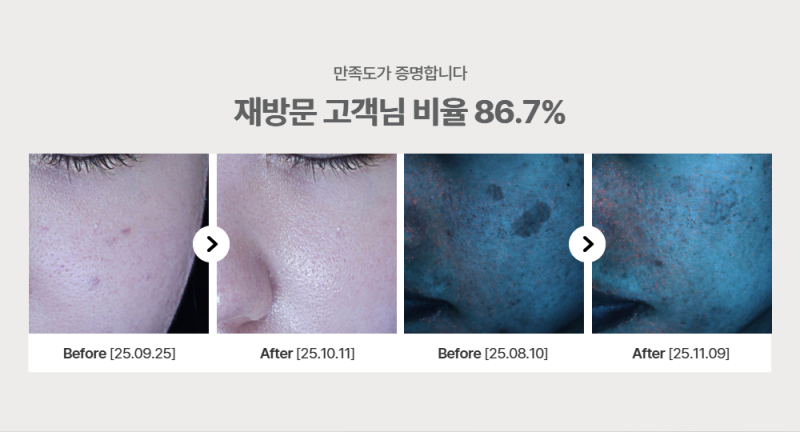
Pore treatment, pigmentation treatment

Direct consultation and treatment by the head doctor

Sio Clinic does it well

Current pore and pigmentation treatment reservations

are closed for this weekend!

If you inquire quickly,

we will guide you sequentially

according to the reservations.

本記事はシオクリニック公式Naverブログの原文をもとに再構成したものです。

もっと詳しくご相談しませんか?

シオクリニックの精密診断で、あなたに合った施術をご案内します。