[Seongsu/Ttukseom] Why Sio Clinic Introduced Serf Instead of Thermage
![[Seongsu/Ttukseom] Why Sio Clinic Introduced Serf Instead of Thermage](https://d2pfwwt98s720h.cloudfront.net/clinic-blog/5/224352948775/eee6b681f06626edf22775bdb6a5052aa412449a.png)
[Seongsu/Ttukseom] Why Sio Clinic
Introduced Serf Instead of Thermage
Serf and Thermage are both radiofrequency,
so why aren't they the same procedure?
Hello, this is Sio Clinic.
If you are interested in lifting procedures these days,
you have likely heard the names
'Thermage' or 'Serf' at least once.
"Isn't Thermage the go-to for radiofrequency lifting?"
"How is Serf different from Thermage?"
"They say it's less painful, but is it really effective?"
Our patients often ask us
these questions as well.
When considering elasticity treatments,
many people focus solely on
trendy devices or brand names.
However, skin thickness, the direction of sagging,
and the depth to which energy needs to reach
vary from person to person.
In this post, we would like to explain in detail
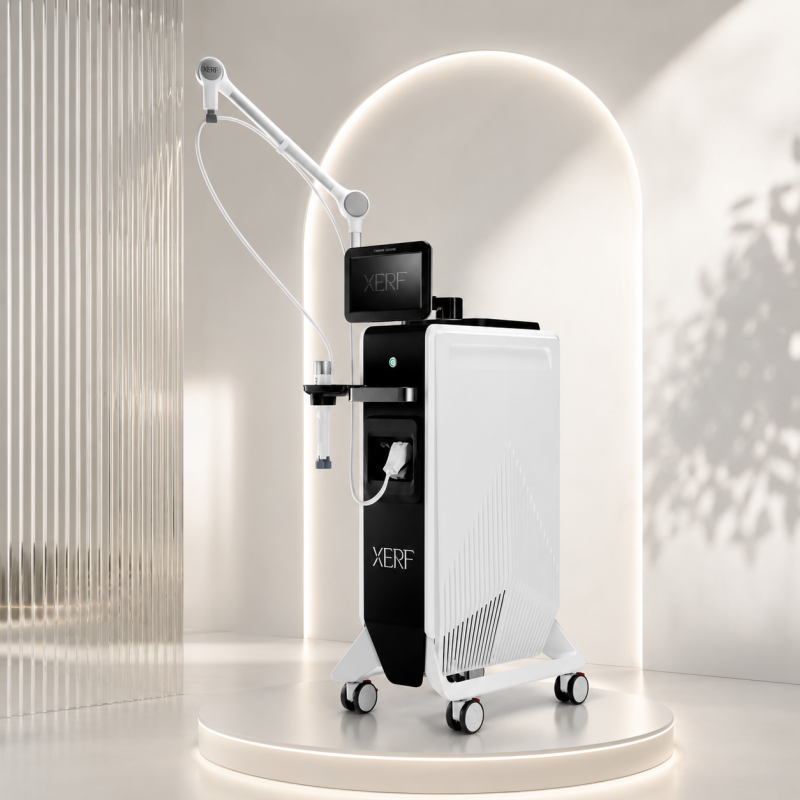
why Sio Clinic introduced Serf lifting,
and the principles and differences
between these two radiofrequency devices.
Q1. Serf and Thermage are both radiofrequency, so why are they different?
The commonality between the two devices is that they utilize RF,
or radiofrequency energy.
The basic principle is the same: applying heat stimulation
to the skin to induce collagen contraction and regeneration,
thereby helping to improve elasticity.
However, there is a significant difference in the way
energy is delivered into the skin.
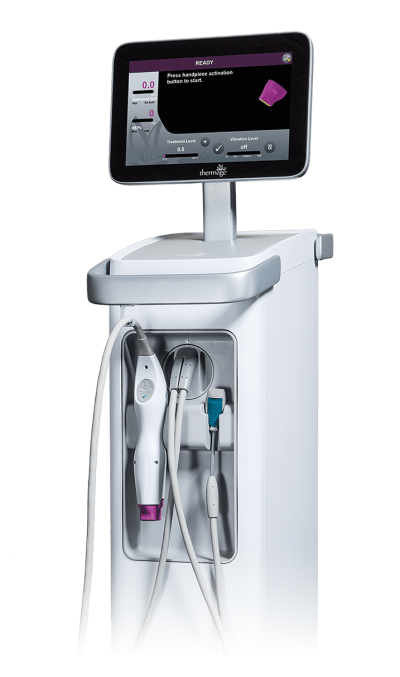
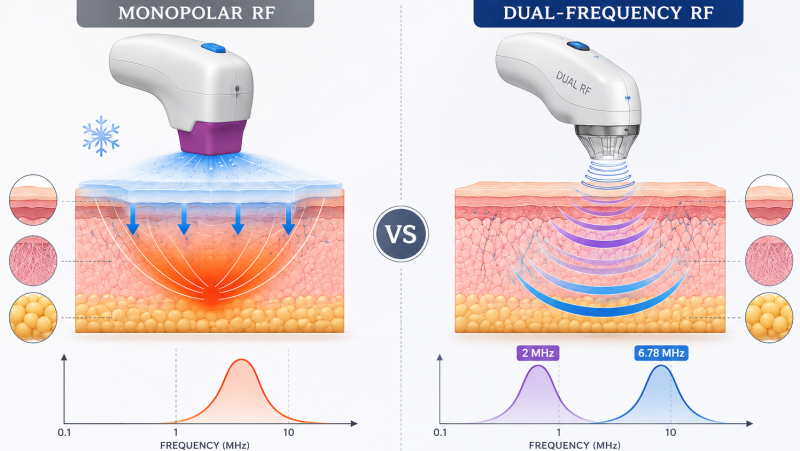
Conventional Thermage uses a single radiofrequency
to promote overall skin elasticity.
Strong cooling is activated to prevent surface damage,
and the alternation between cooling and energy
creates a characteristic stinging heat sensation.
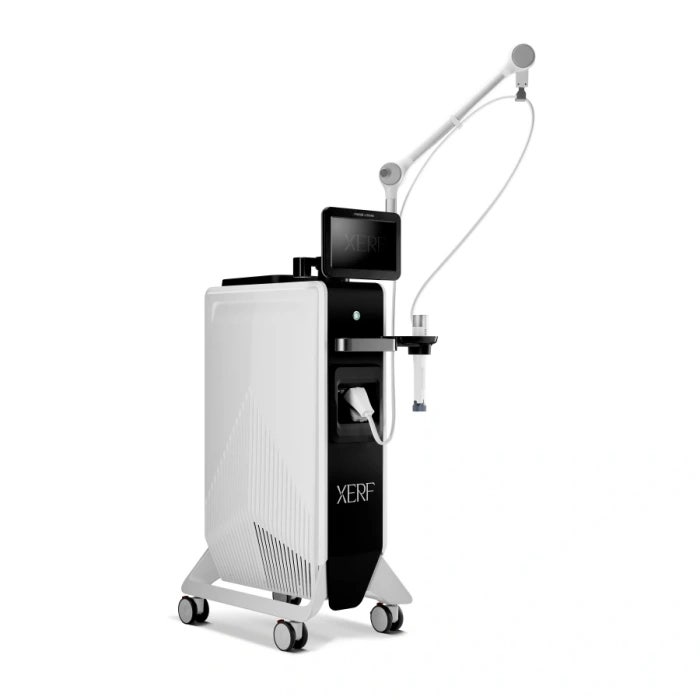
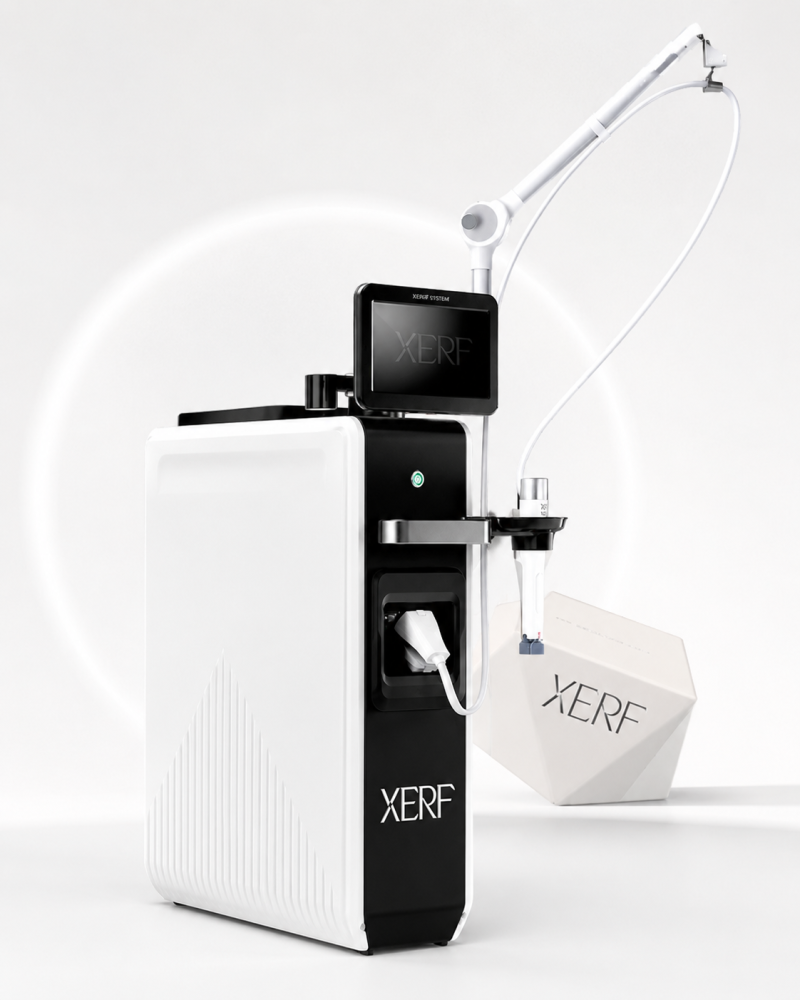
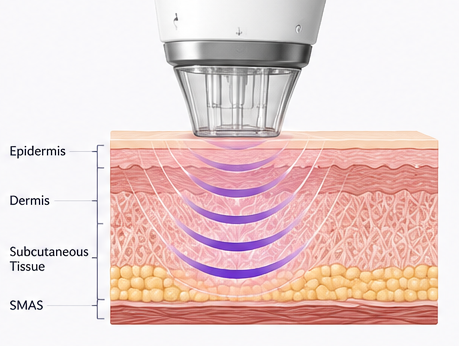
On the other hand, Serf adopts a 'dual radiofrequency' method,
using two frequencies, 6.78MHz and 2MHz, alternately.
Because the energy is not concentrated all at once
but is divided and delivered to both shallow and deep layers,
it has the characteristic of being able to deliver heat
efficiently with only gentle cooling.
Q2. If there is less pain, is the effect weaker?
This is also a question we receive very often.
To give you the conclusion first, perceived pain
and skin reaction are not necessarily proportional.
The reason Serf feels less painful during the procedure
is not because the energy intensity is weak,
but because of its unique delivery structure that
protects the surface while calmly pushing energy in.
Because it delivers energy to the dermis layer
while reducing skin surface irritation,
it can induce sufficient stimulation
while lowering the burden of discomfort.
However, just because it is less painful does not mean
it is suitable for every skin type.
If the skin is very thin or sensitive,
or if there is a history of previous procedures,
it is essential to carefully adjust the energy intensity
and range according to the individual's skin condition.
Q3. What changes can I expect after a Serf procedure?
Rather than a change that pulls the skin excessively,
Serf is a procedure that helps fill in natural elasticity
and refine contours along the direction of sagging.
You can mainly expect changes in the following areas:
· Reduction of sagging in the cheek area
· Refinement of dull jawlines
· Improvement of overall dense skin elasticity
· Improvement of skin texture caused by fine lines
· Supplementing heavy-looking facial lines
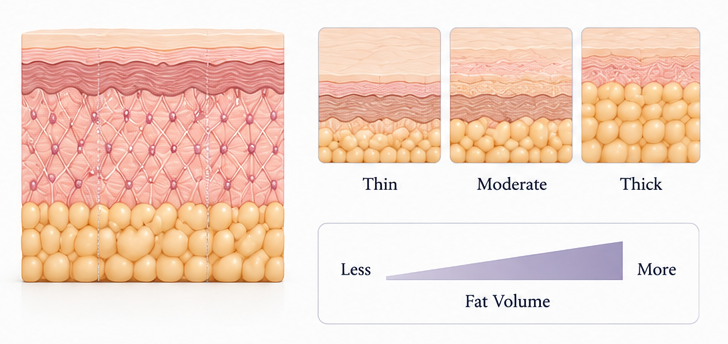
However, if the sagging is already severe or there is a lot of fat,
a radiofrequency-only procedure may leave something to be desired.
In such cases, it may be helpful to consider
ultrasound devices or non-surgical methods
together, depending on the skin condition.
Q4. How long does the maintenance period last?
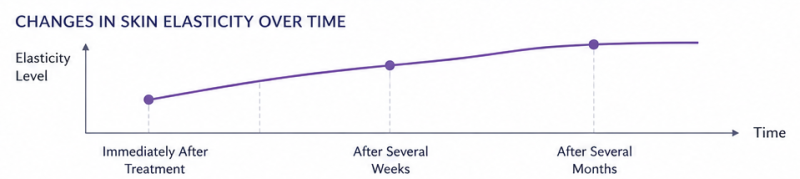
Radiofrequency elasticity procedures show a primary
tightening sensation due to heat immediately after the procedure,
followed by a flow of collagen regeneration over time.
Although there are individual differences,
we explain the general progress as follows:
· Immediately after: Tightening sensation due to heat stimulation
· After several weeks: Gradually filling elasticity
· Lasting several months: Elasticity maintenance based on individual response
The maintenance period varies depending on individual lifestyle habits,
skin thickness, and the degree of collagen response.
Therefore, rather than a definitive period,
we recommend setting a management cycle that suits you
through an individual diagnosis.
Q5. Why Sio Clinic introduced Serf
The reason Sio Clinic in Seongsu/Ttukseom
introduced and utilizes Serf is
because it can reduce the burden of procedural pain
felt by patients while delivering customized energy
to each skin layer.
While it is clear that Thermage is a long-proven device,
Serf is an excellent option for those who are sensitive to pain
or require meticulous care according to skin layers.
What is important is not the reputation of the device
or the reviews of others.
· Skin thickness and elasticity status
· Location and direction where sagging began
· Fat layer thickness and distribution
· Pain sensitivity during the procedure
Carefully examining all these items in advance
and designing an energy method that fits you
is the key to desirable lifting.